
%20detail%204.jpg)

-web.jpg)


.png)


-web.jpg)



























.JPG)









TOXIC MATTER
Grimbergen
Type
Curated by Charlotte Crevits.
Two new works for commissioned for the exhibition:
Plastivore Potential, 2026 a smell installation in collaboration with Sissel Tolaas and a video work titled Pattern of Activation (plankton), 2026.
The exhibition was supported by the Mondriaan Fonds.
The emergence of photosynthesis on Earth was followed by a great dying. Oxygen, released by the cyanobacteria in the process of translation of light into chemical energy, was poison to almost everything that lived on Earth 2-3 billion years ago.
In our days, the oceans are being poisoned by a new great chemical destabilizer – the plastic. The carbon bonds in plastics are notoriously strong, and therefore take a lot of energy to break. Currently there are several species of bacteria, fungi and larger organisms known to digest certain types of plastics. If plastic becomes digestible on a planetary scale, life as we know it might radically transform once again. And when the plastic-eating transition takes hold, how will it modify the smell of the ocean?
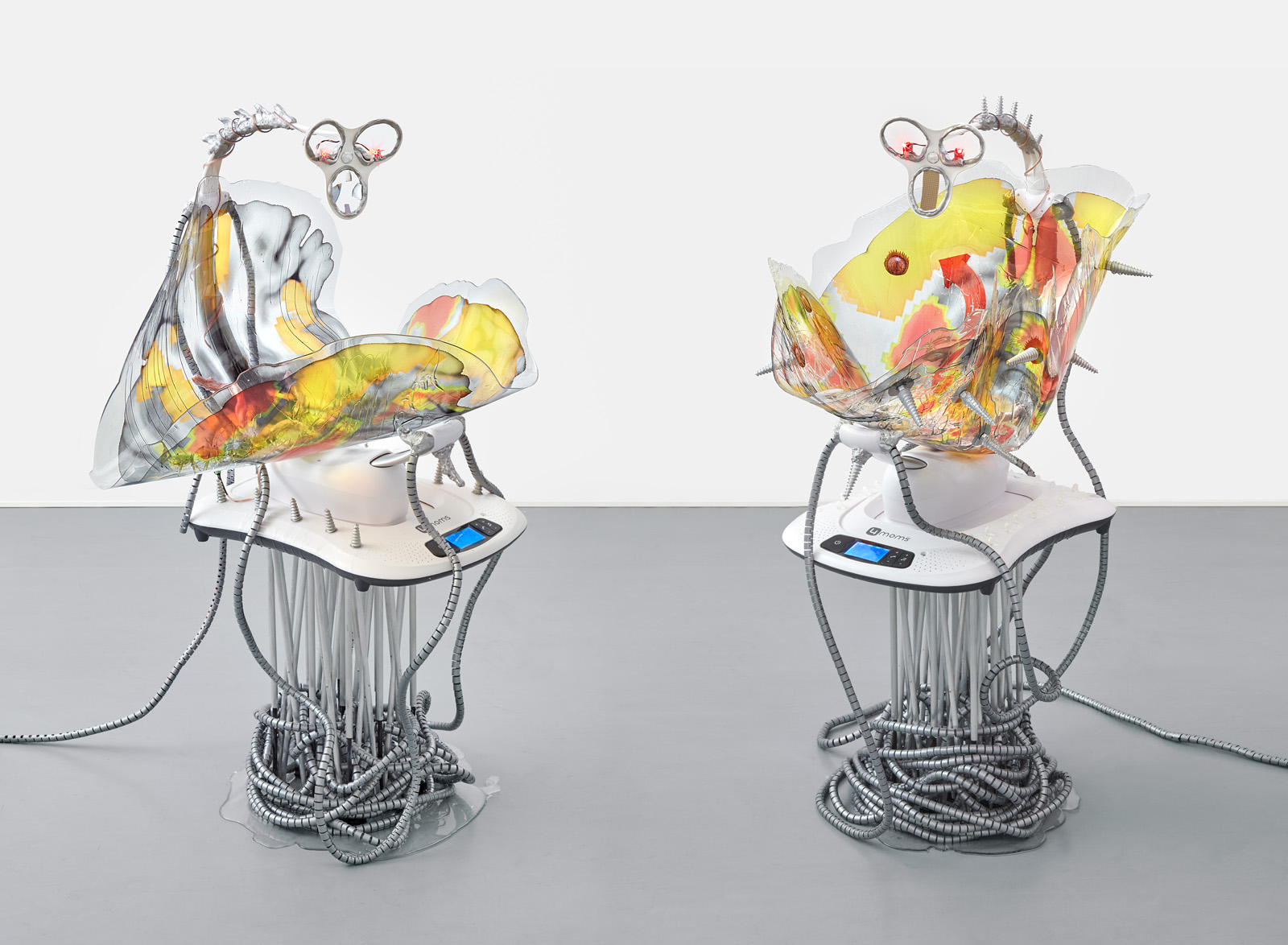
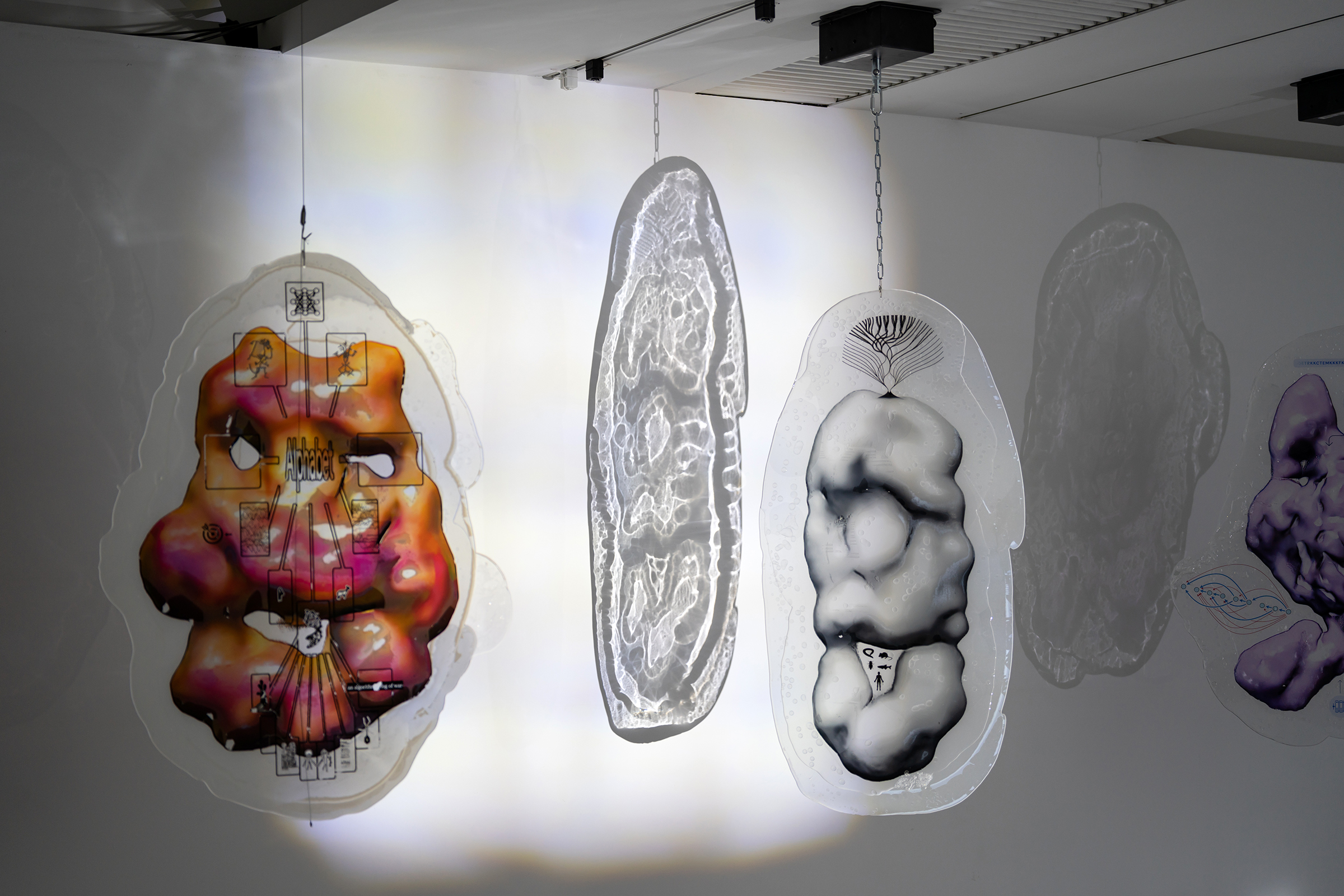
The exhibition explores the gradients between toxicity and life through the lens of a human-created technological “eye”, both visual and chemical. Human intervention into the ecological relationships on Earth occurs not only due to our chemical trace and reconfiguration of matter, but also due to the ongoing process of capturing these relationships in the form of data, both visual and in other registers. Creation, collection and processing of data becomes an ecological factor in itself, as the resources to construct the global apparatus behind it extend from the deepest mines to the satellites in space, consuming humongous amounts of energy.
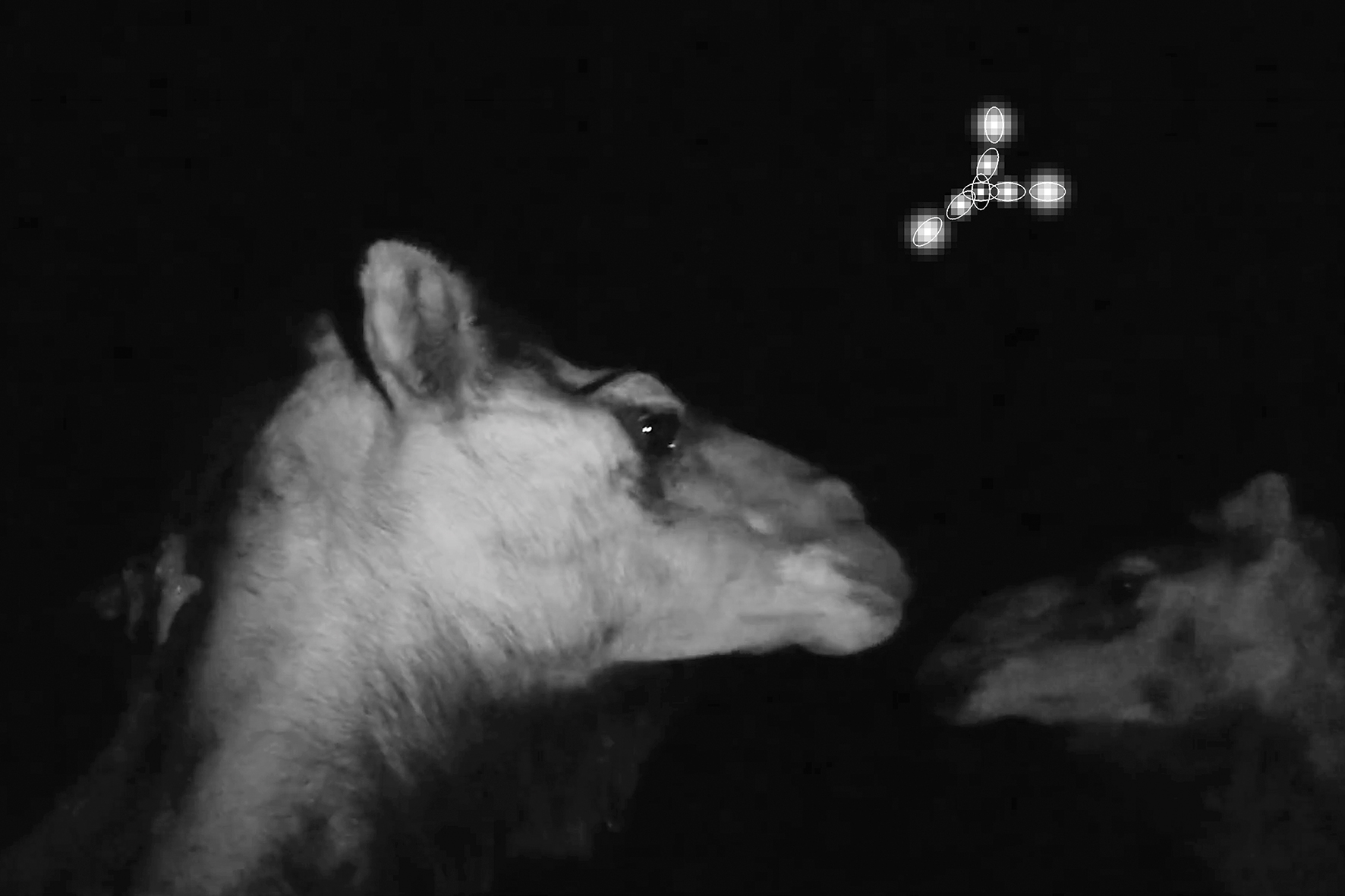
So the “algorithmic eye” can also be understood as another novel “polluting” agent, across all ecosystems. It is simultaneously an extension of human perception as well as a never-seen-before form of computational and mechanical vision. In that, it overlaps with other nonhuman sensing systems like the ones of crustaceans, cephalopods, giant mycelium, birds, sharks, and so forth. As we have entered an era when most sensory data produced in the world today is being registered primarily by computational sensors, perhaps also the majority of encounters between biological life and humans happens through mediation of machines and our trash. We are not there directly in the ocean looking at the billions of tiny plankton, the camera is. And however the plankton can look back at ‘us’, it only sees our mechanical extension, and the discarded remains of our industrial age. The shark with its acute sense of smell perhaps never encounters individual people but will be able to register a new smell of digested microplastics. On a speculated longer trajectory both the microplastics and the machinic sensory apparatuses are life-modifying, thoroughly transforming the marine ecological chains.
The exhibition aims to “zoom into” these interactions and register them via the visual language of the computational vision as well as the smells of metabolized synthetic materials.
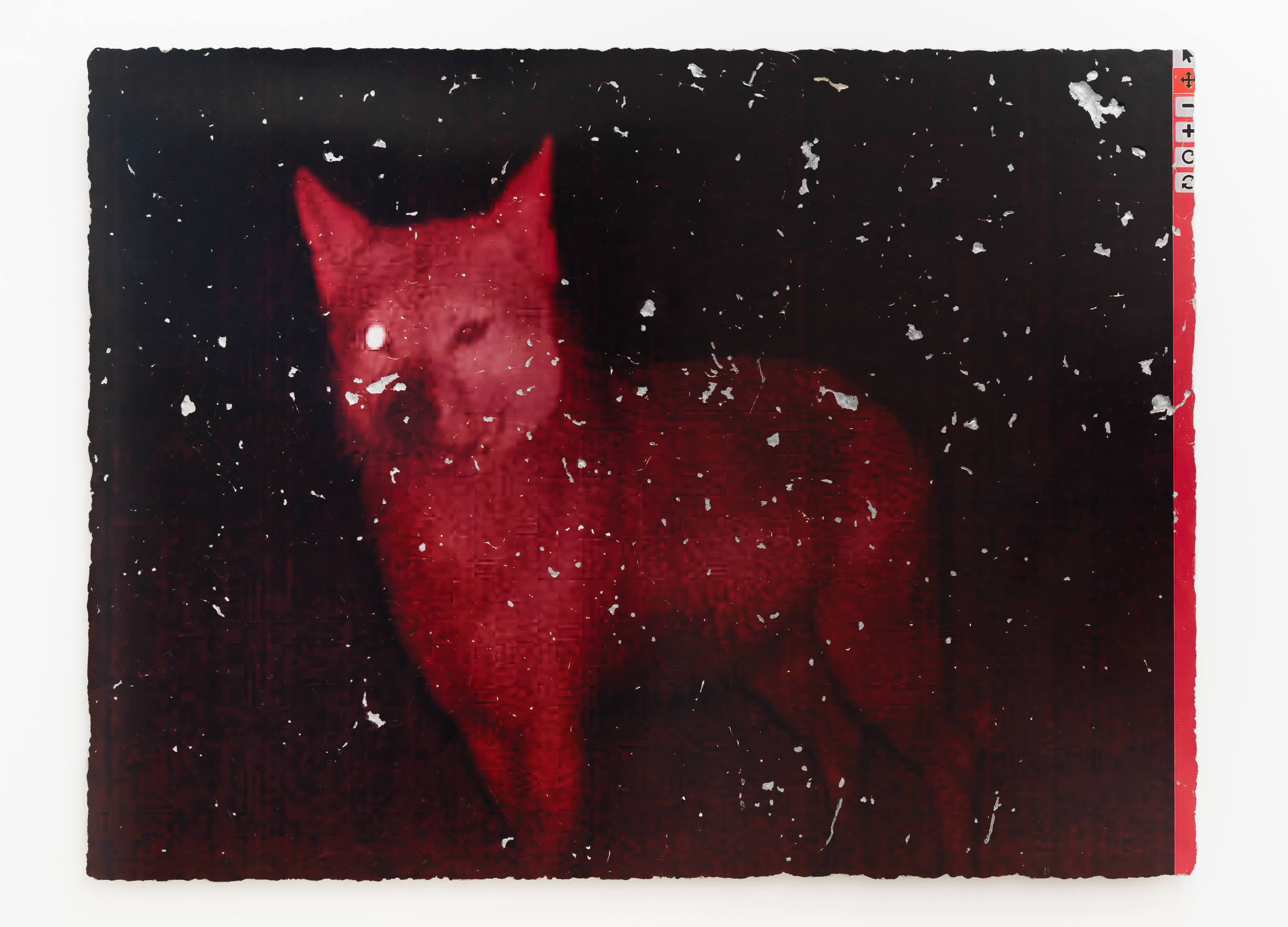
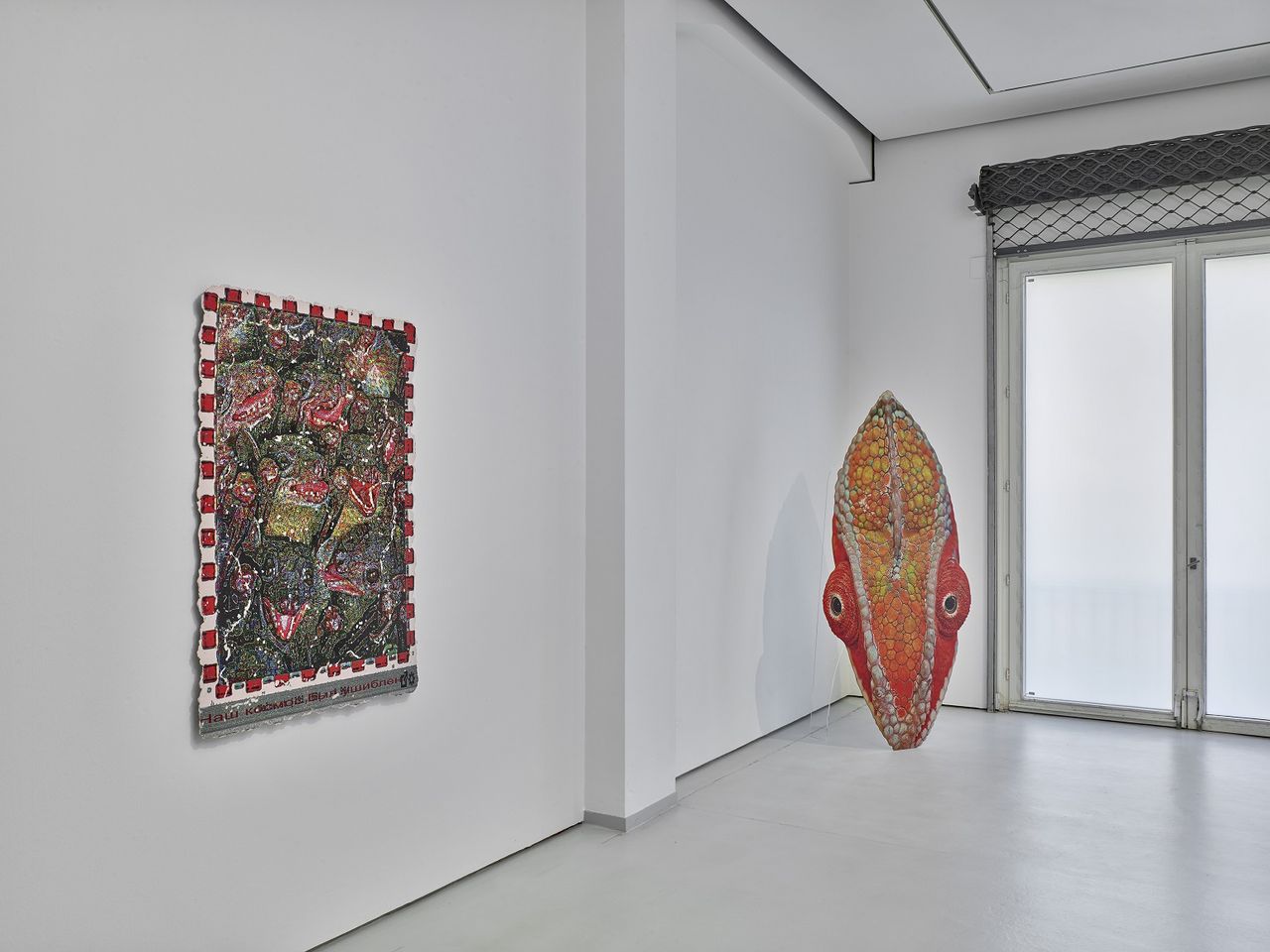
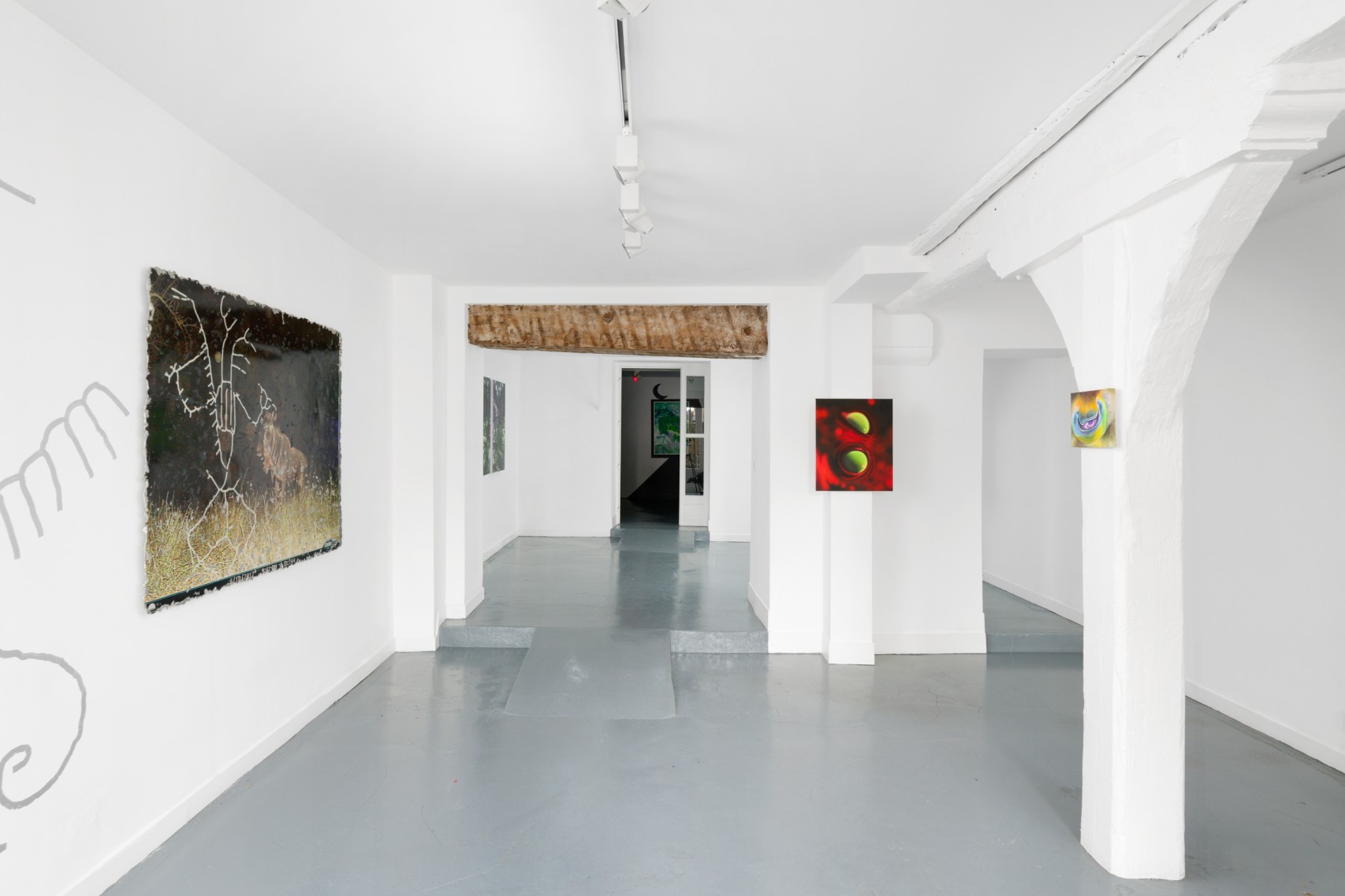
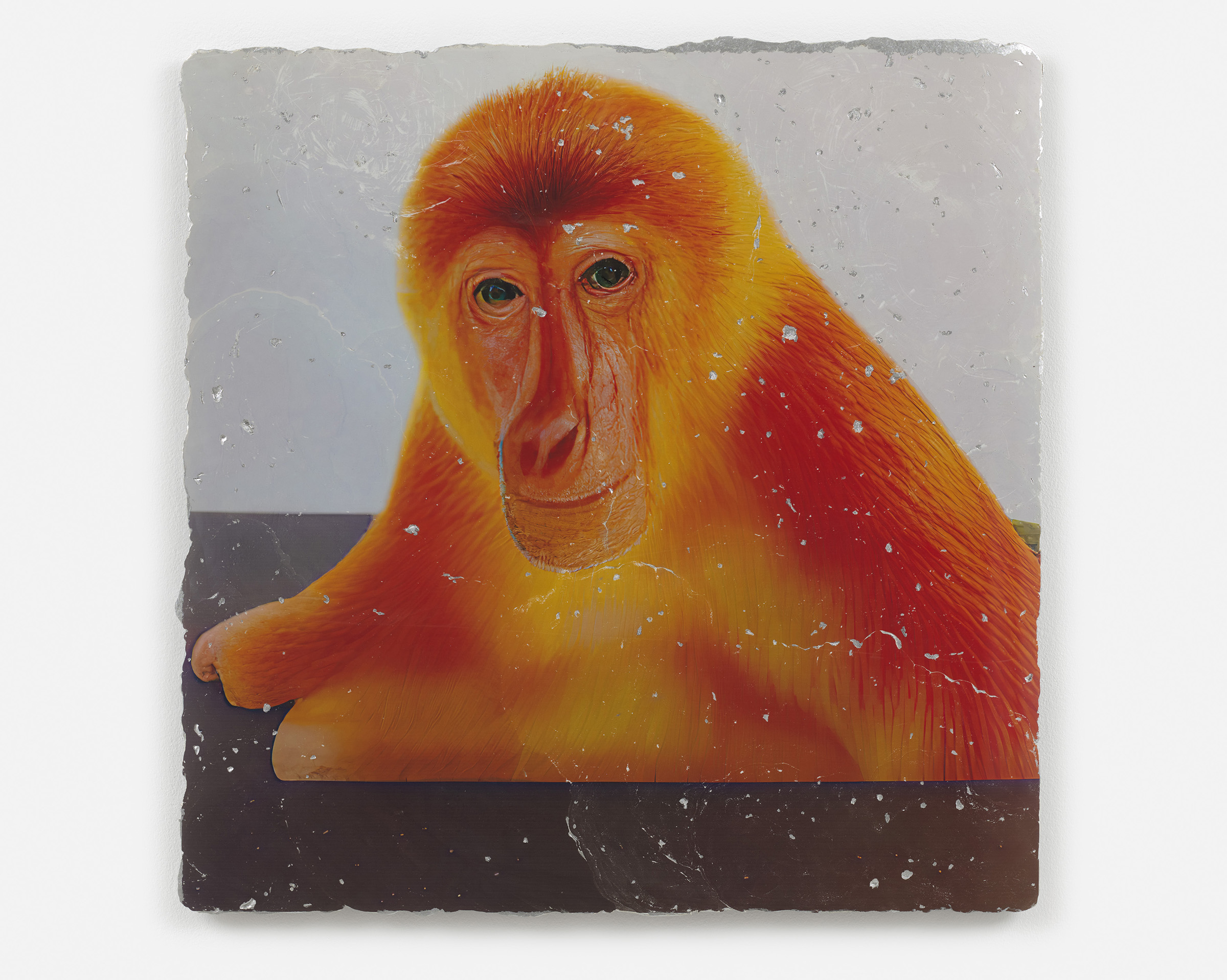
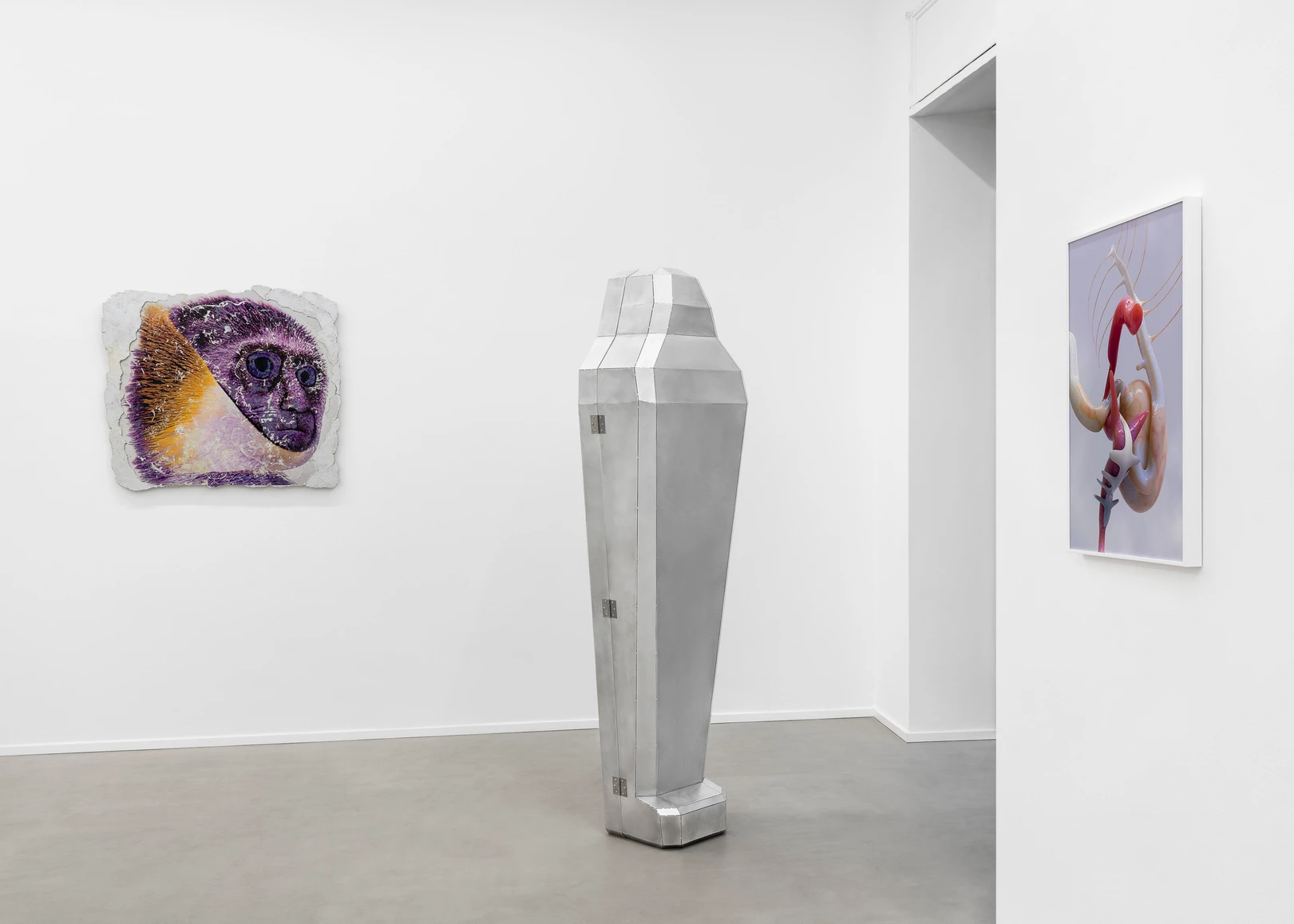
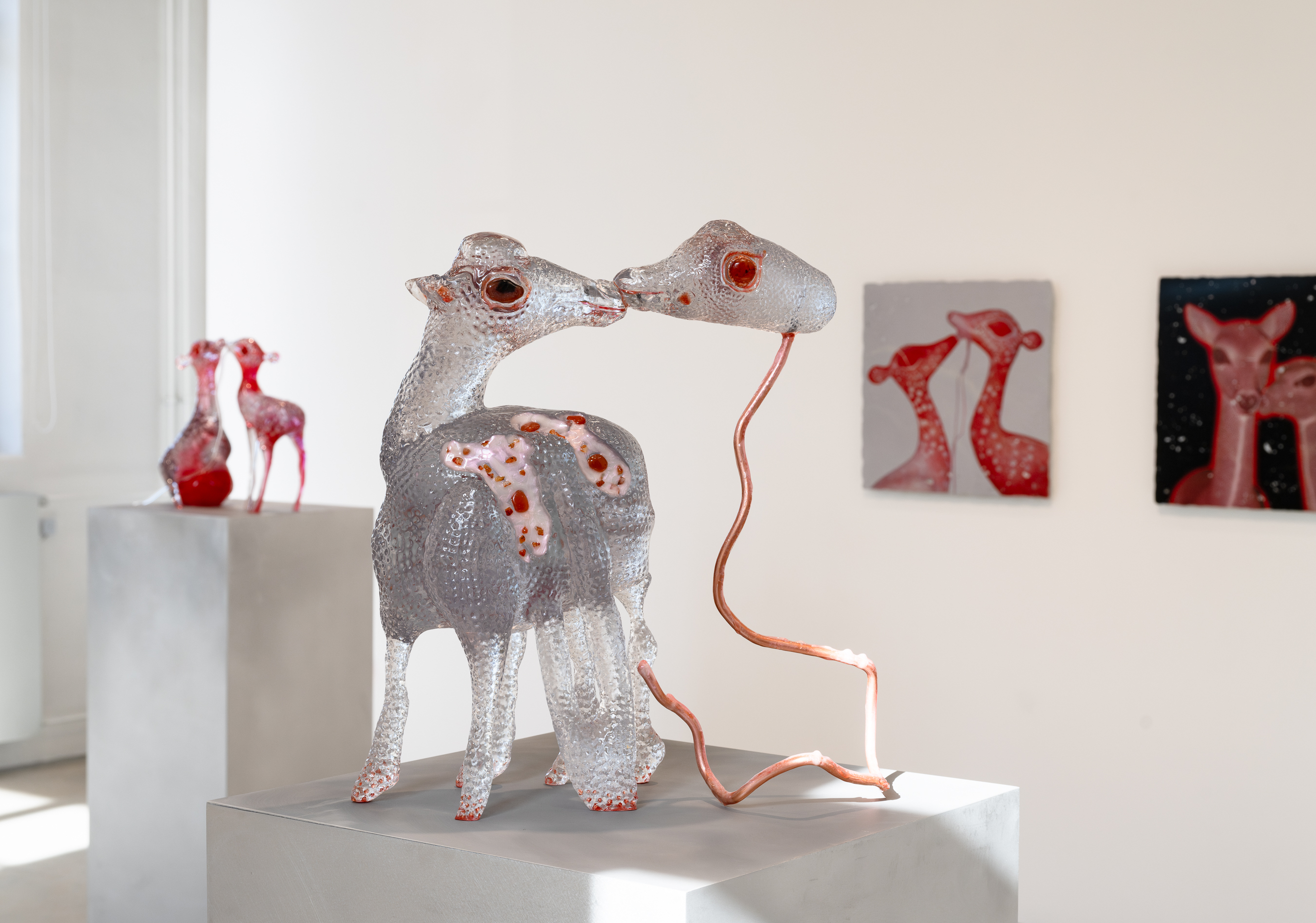
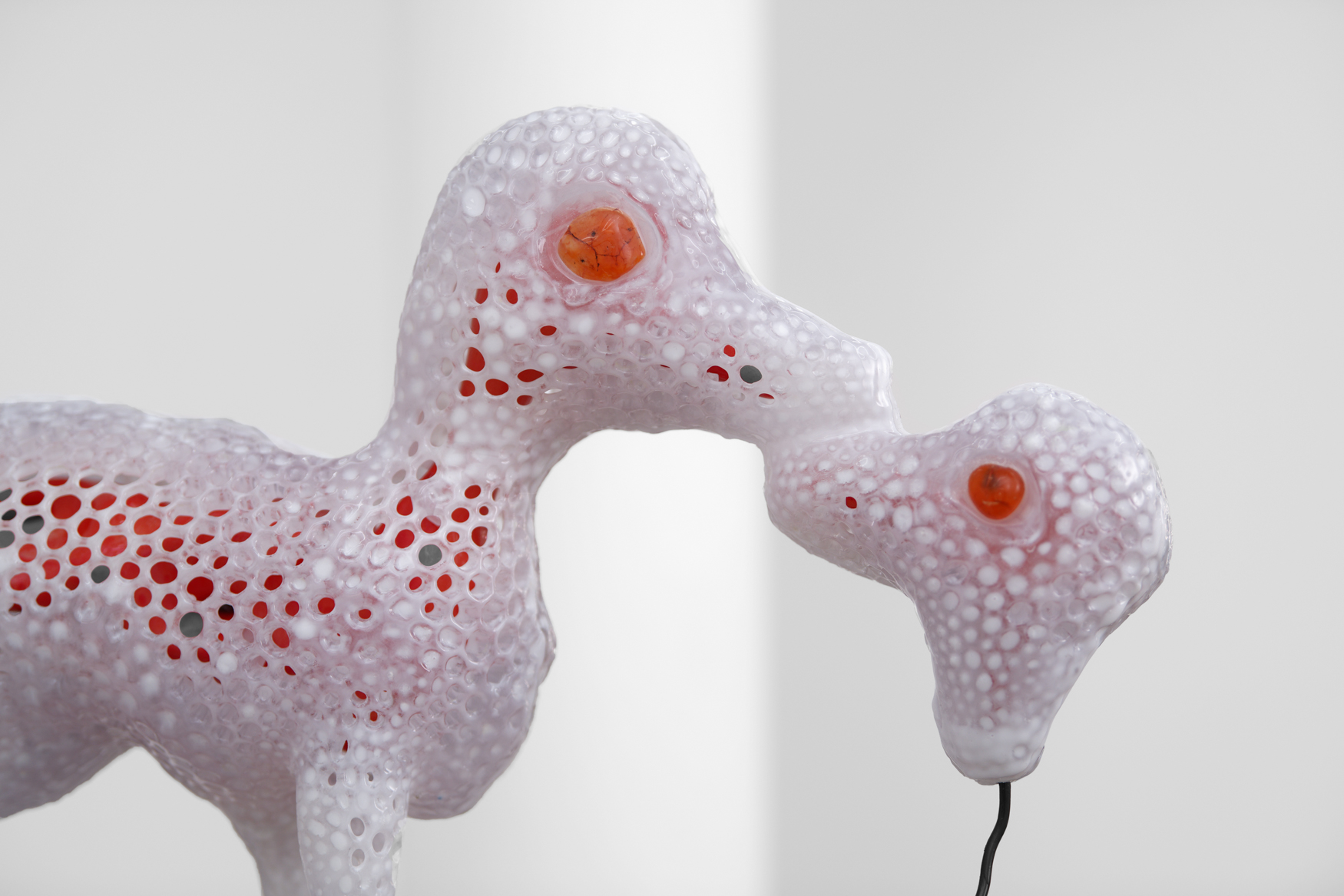
The topic relates deeply to my own practice that has seen digital and synthetic materials at its core. I have developed techniques working with synthetic materials like epoxy clays, polyurethane resins and digital representations. My work has been attempting to register the ever-changing techno-industrial world by registering how it visually depicts and captures natural life. In the search for hidden patterns and narratives that come from within these conditions I have almost exclusively worked with materials, tools and cultural artefacts that this reality produces.
In this exhibition I am moving towards linking the materials I use in my work with their environmental impact. If we consider that most sea animals whose photographs have been taken to create digital images have long perished, it becomes obvious that the synthetic mineralized images “consumed” the biology and will last much longer than the actual creatures, at least until bacteria learn to digest the artificial compounds and the biology prevails. I would like to start unpacking this loop, and imagine a future when everything I have created with the use of synthetics will return back into the food chain or fossilize into deep time.
Plastivore Potential, 2026
In collaboration with Sissel Tolaas
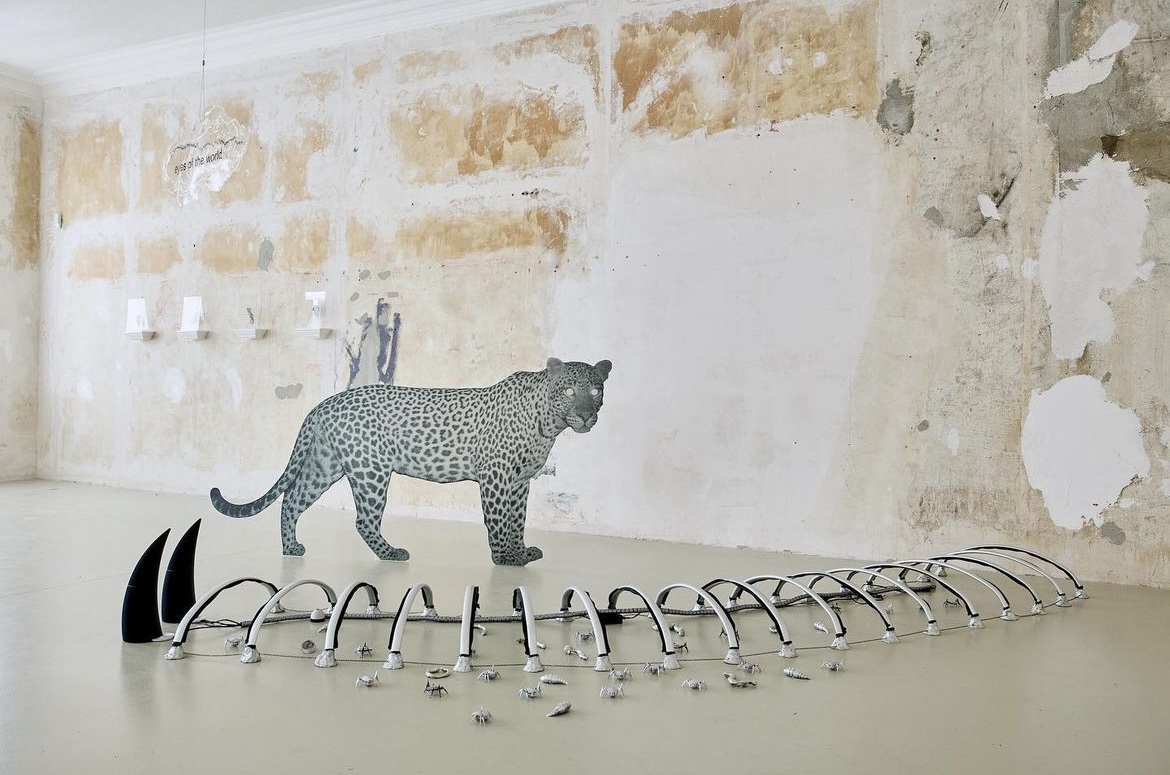
The array of smells Sissel created for the exhibition are conceptualised by us as “a smell of the sea that has been actively metabolising plastics.” I envisioned this smell to be a chemical APPROXIMATION of the time when the plastics in the ocean can be decomposed and absorbed into the chain of chemical transactions of marine life on a large scale – by bacteria, fungi and other organisms. How will then such a sea smell when experienced standing on the shore, in Belgium, on one of the Vanuatu islands or a Californian coast? The chemical cocktail of this experience would include smells of sulfur, rotting flesh, burning plastic, sweet kerosine, metallic coldness and the usual marine smells everyone who has ever been to the sea can never forget.
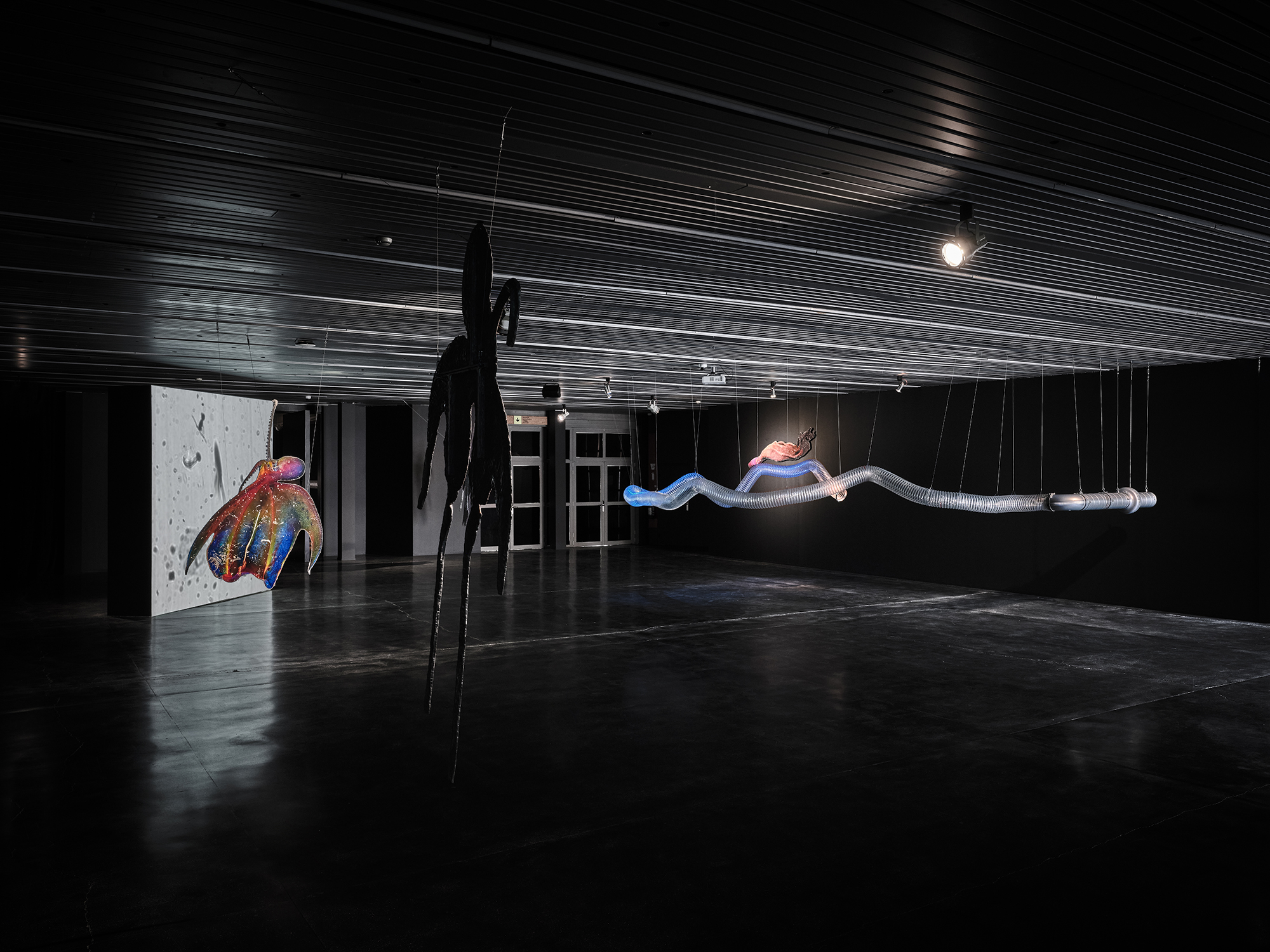
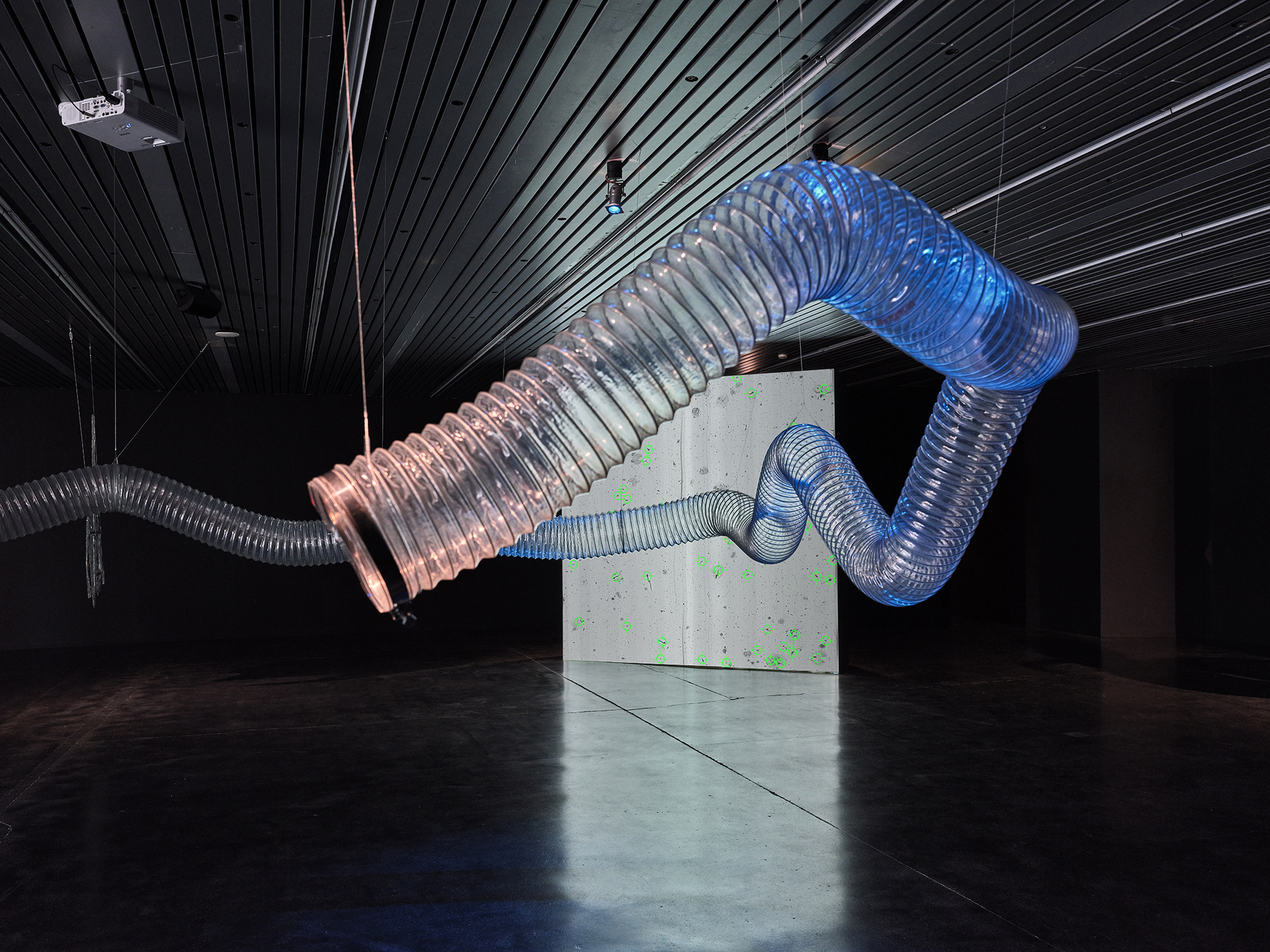
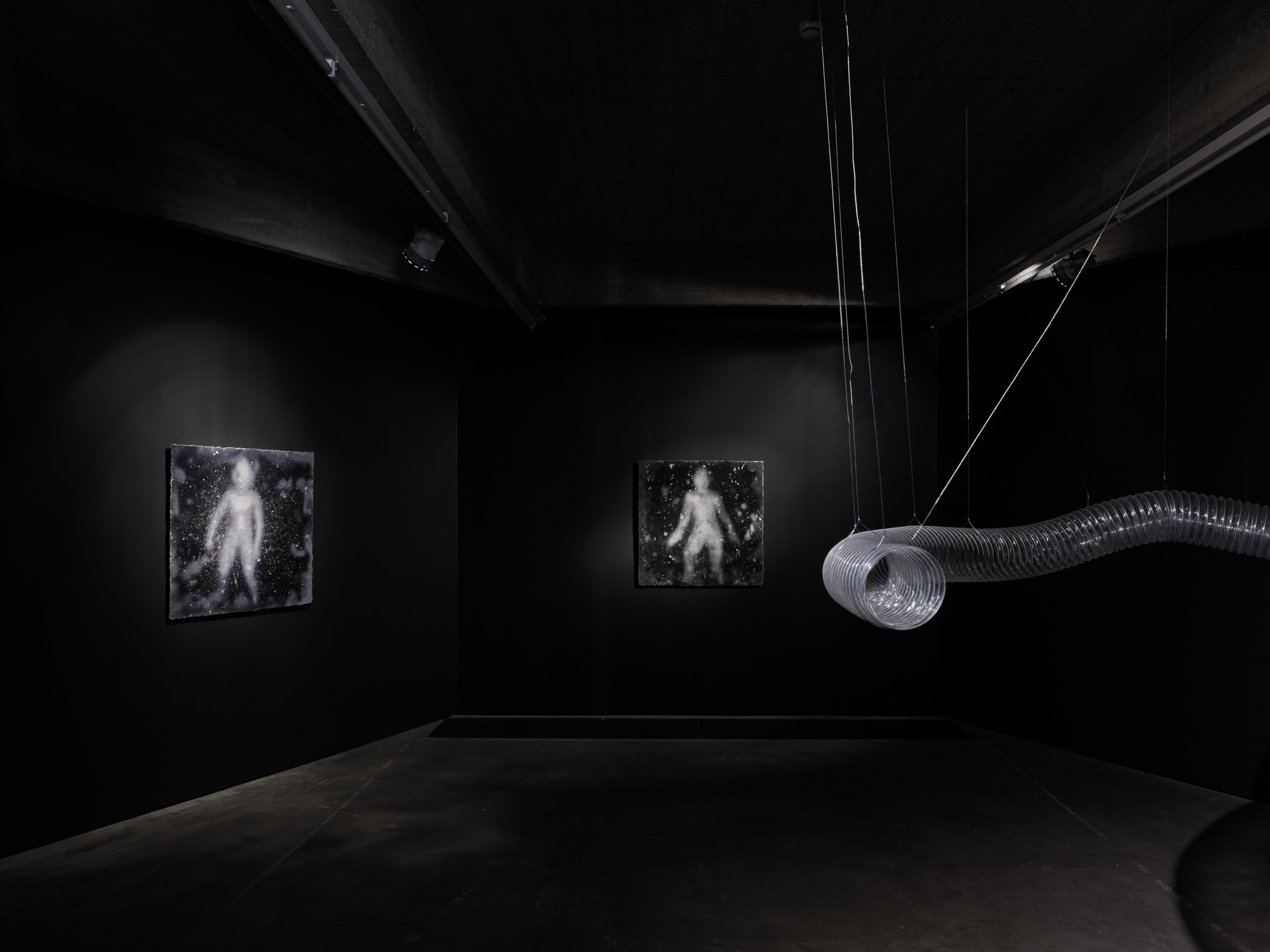
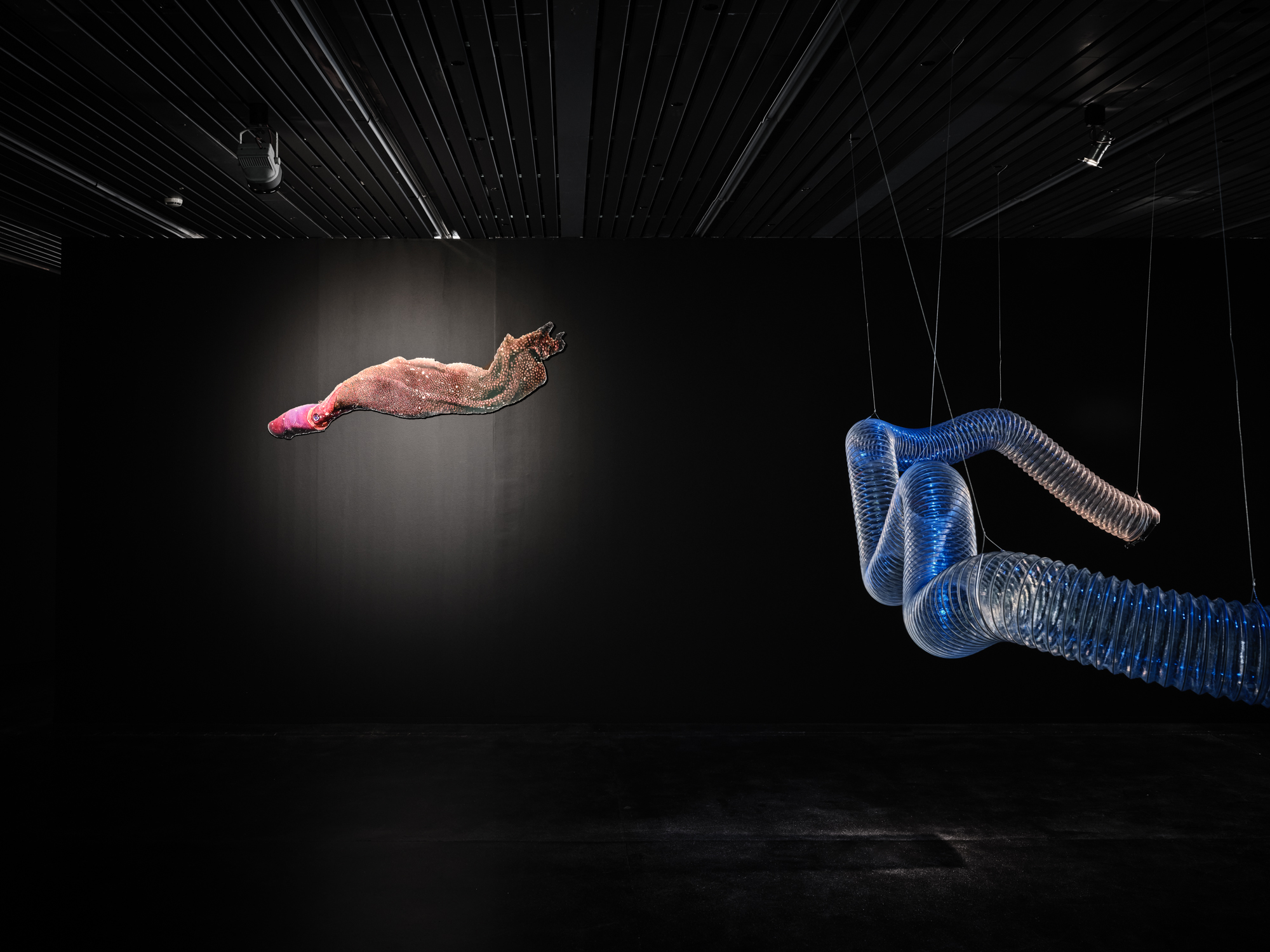
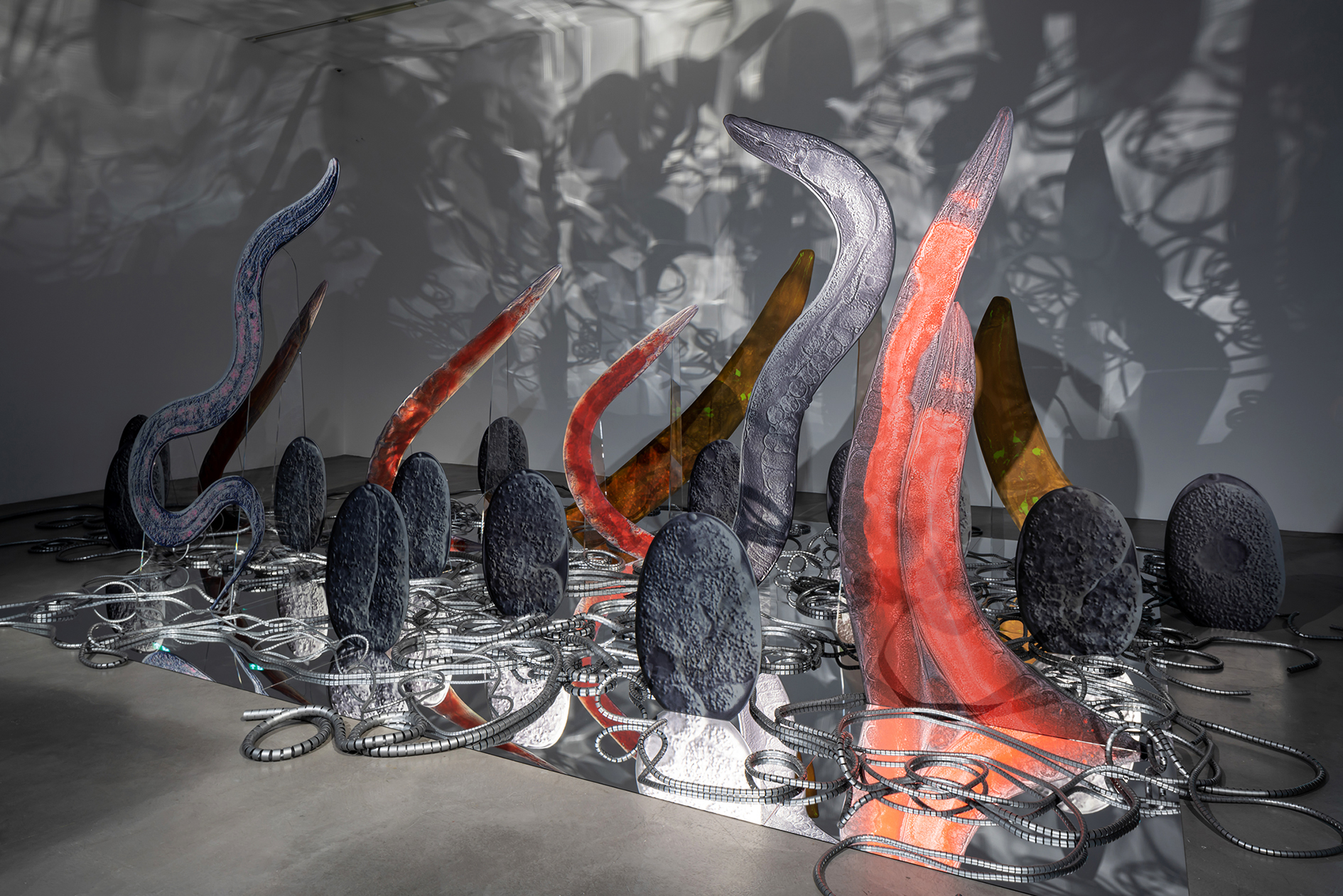
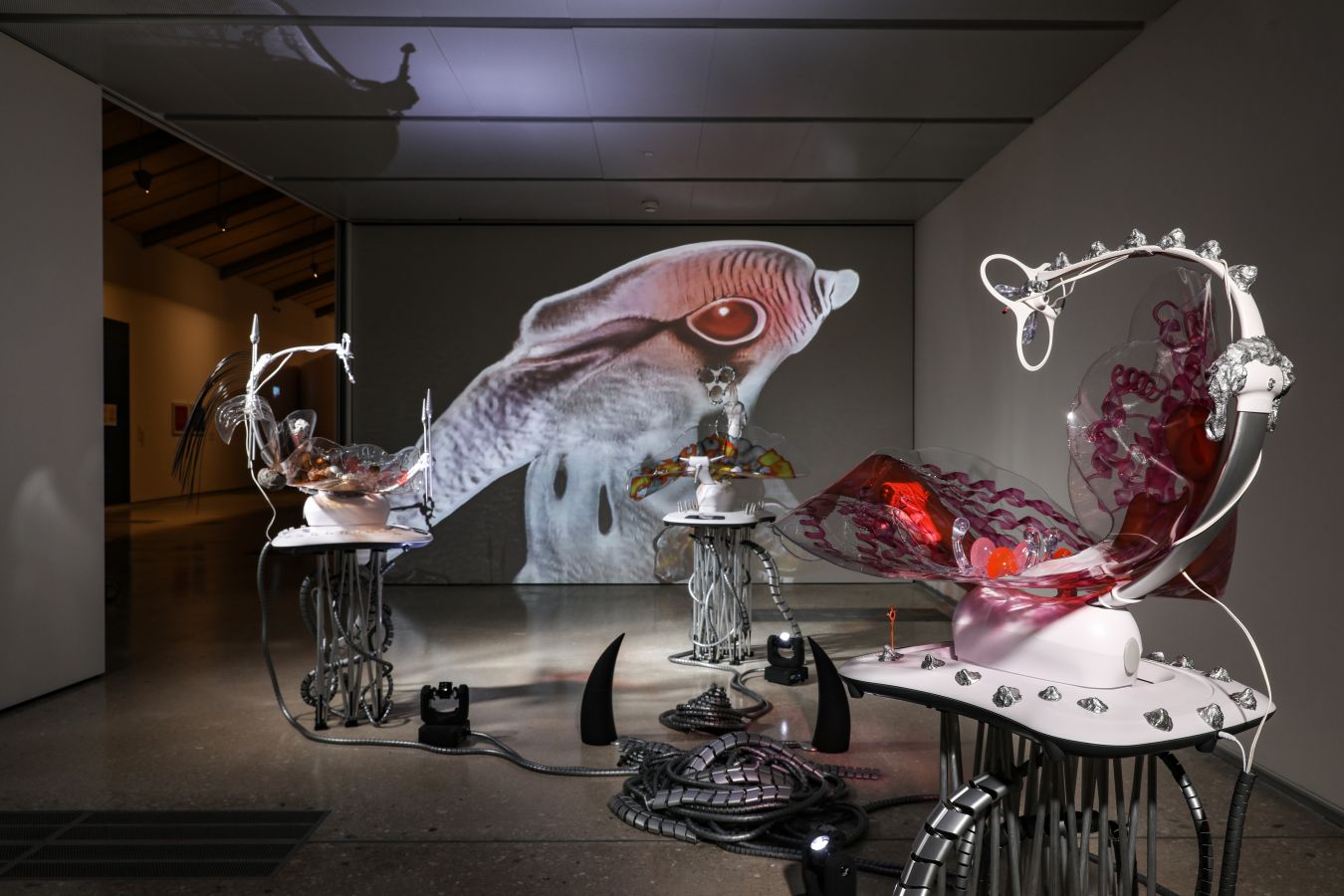
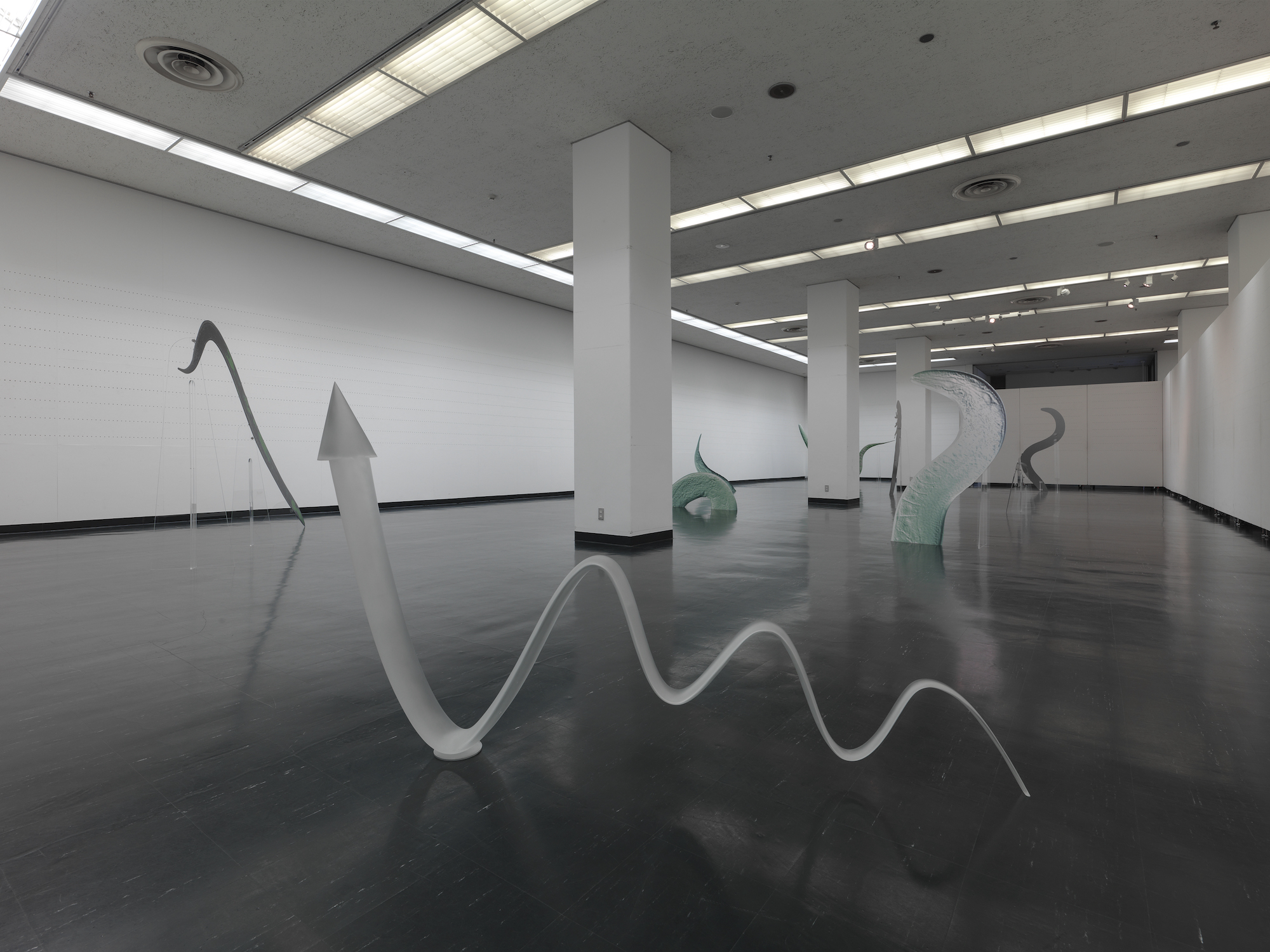
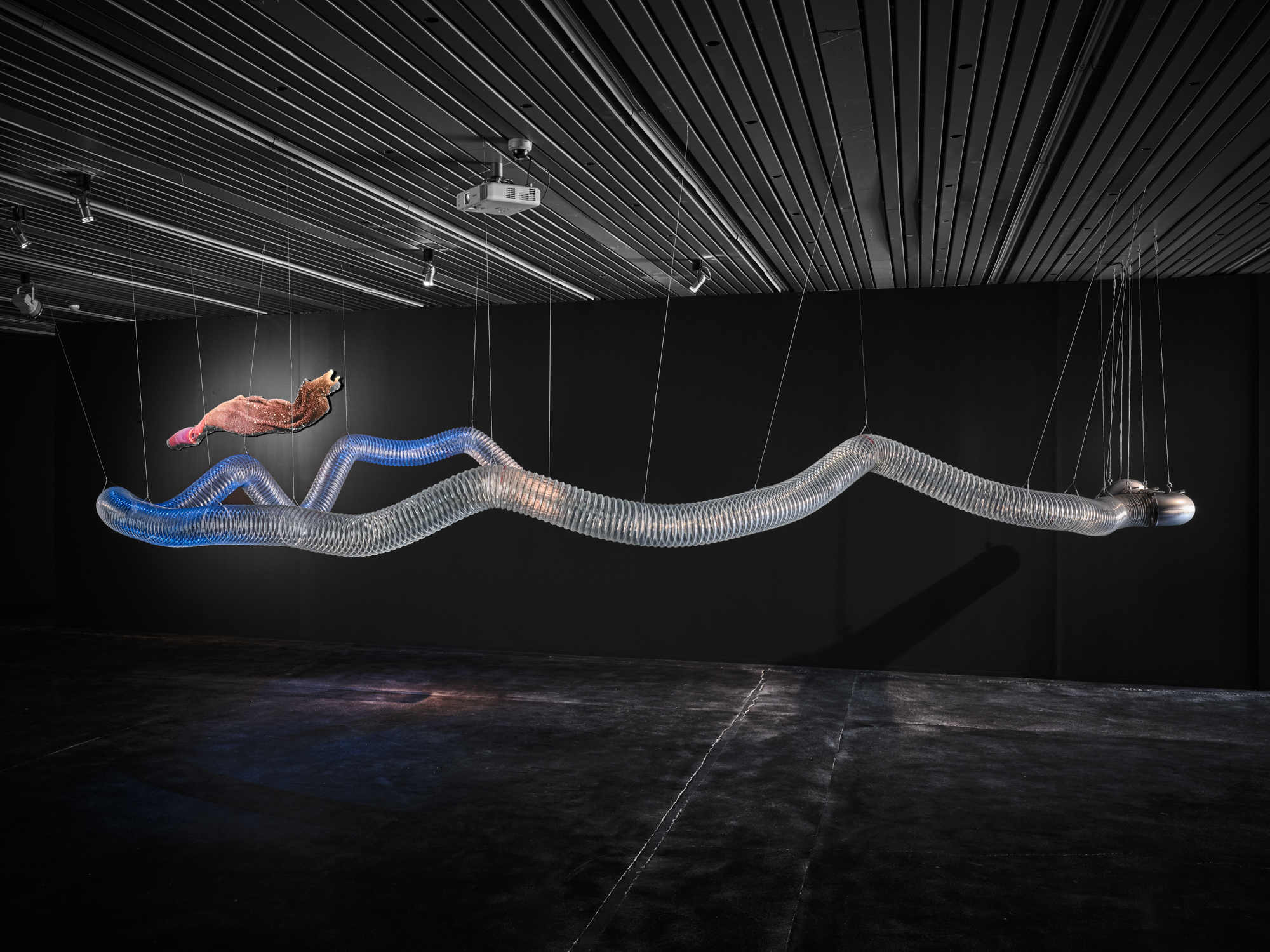
The smell is materialised in the form of long transparent tubes that resemble pyrosomes – elongated colonial collective organisms that inhabit the oceans. As the oceans get warmer due to climate change, pyrosomes have become more common, leaving less food for the already struggling fish and thus becoming among the beneficiaries of a global biotic crisis.
The idea to present a tangible smell of the post-plastic world is my way to explore a new terrain as an artist, adding an additional dimension beyond only the visual one, but also, a way to condense a large amount of environmental discourse into an affective punchline, an activating chemical pattern, that instantly hits the nervous system.
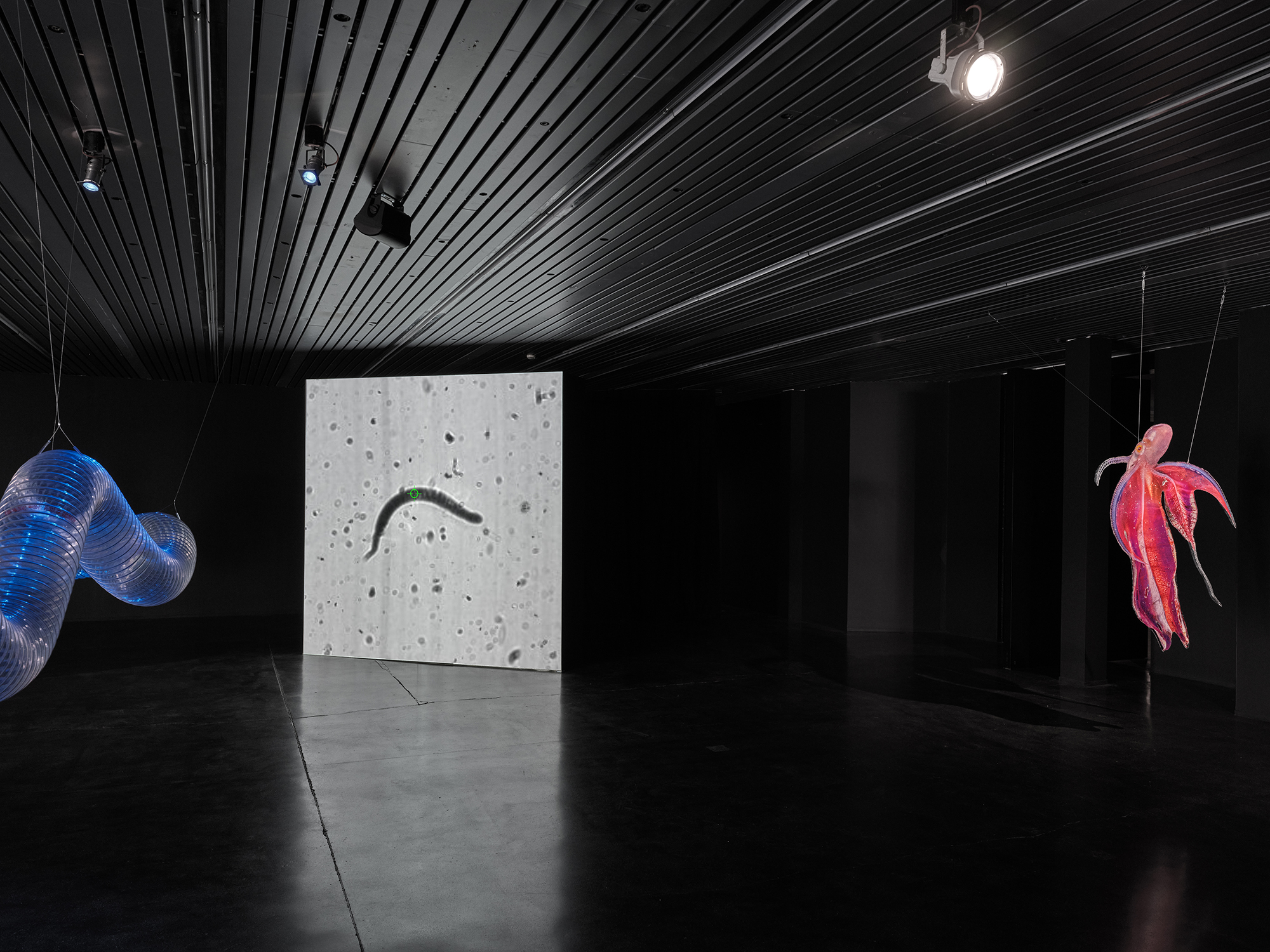
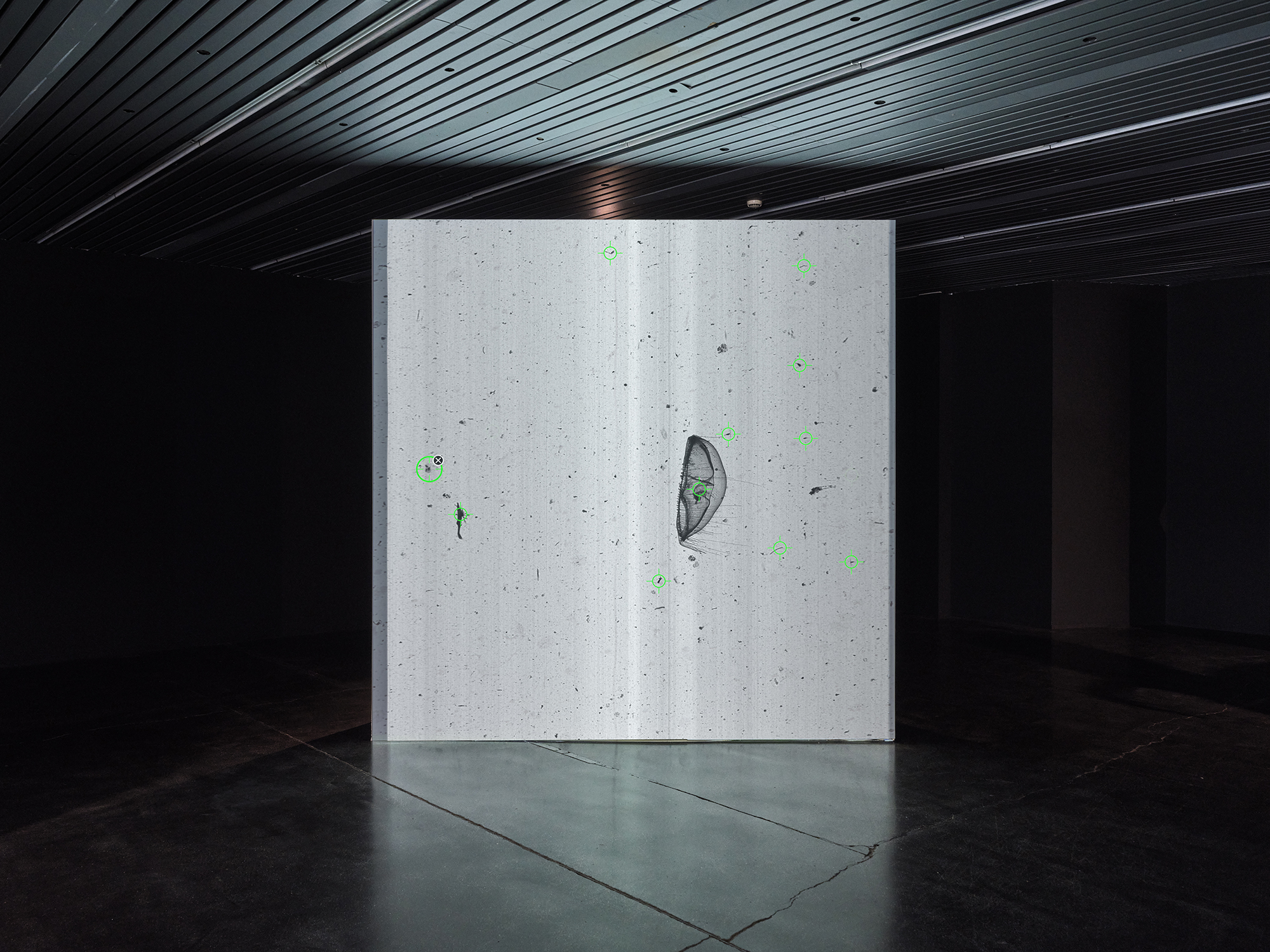
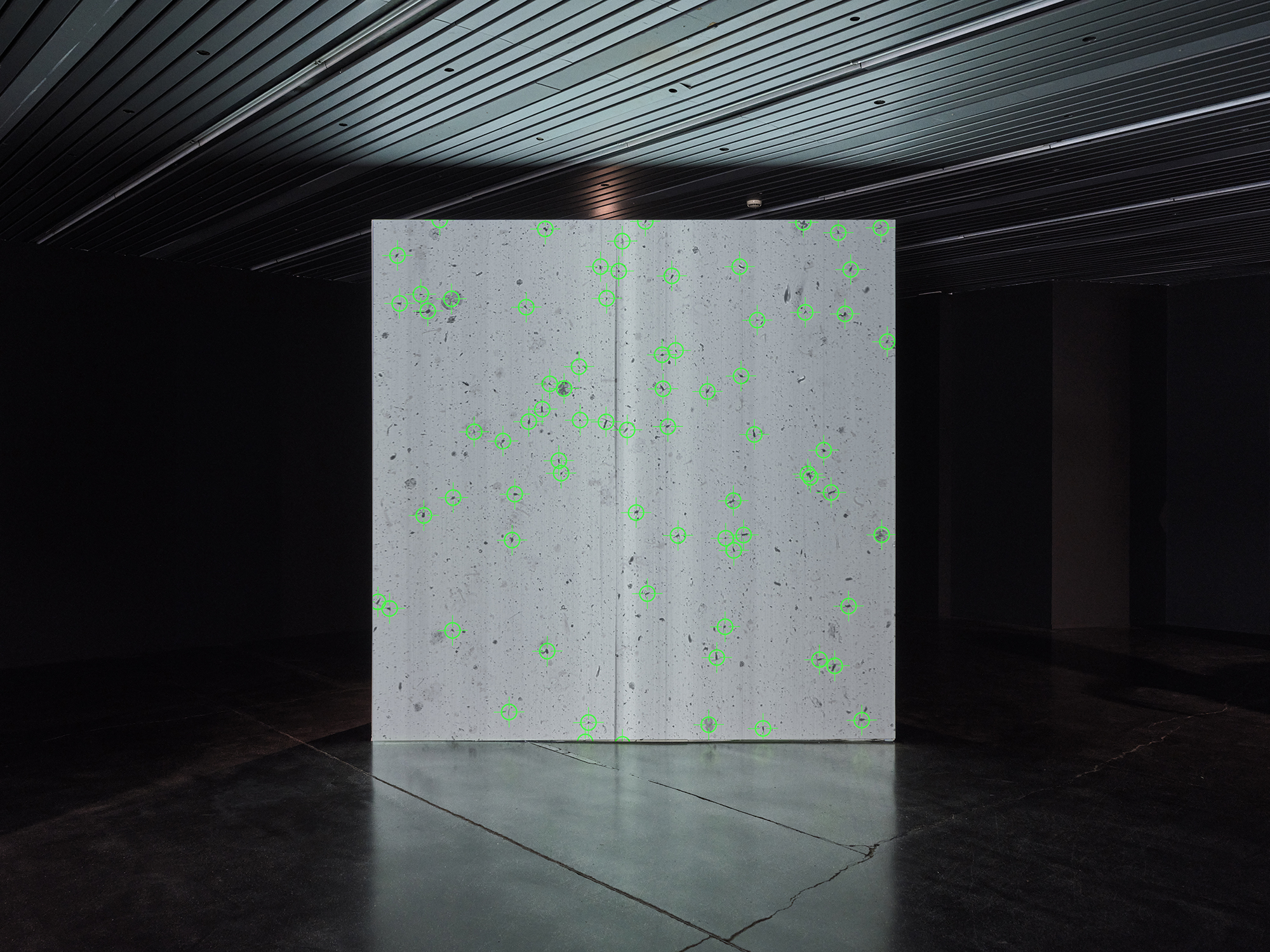
Another new work I made for the exhibition is a video Pattern of Activation (plankton), 2026. Sound by Ghost Lemurs
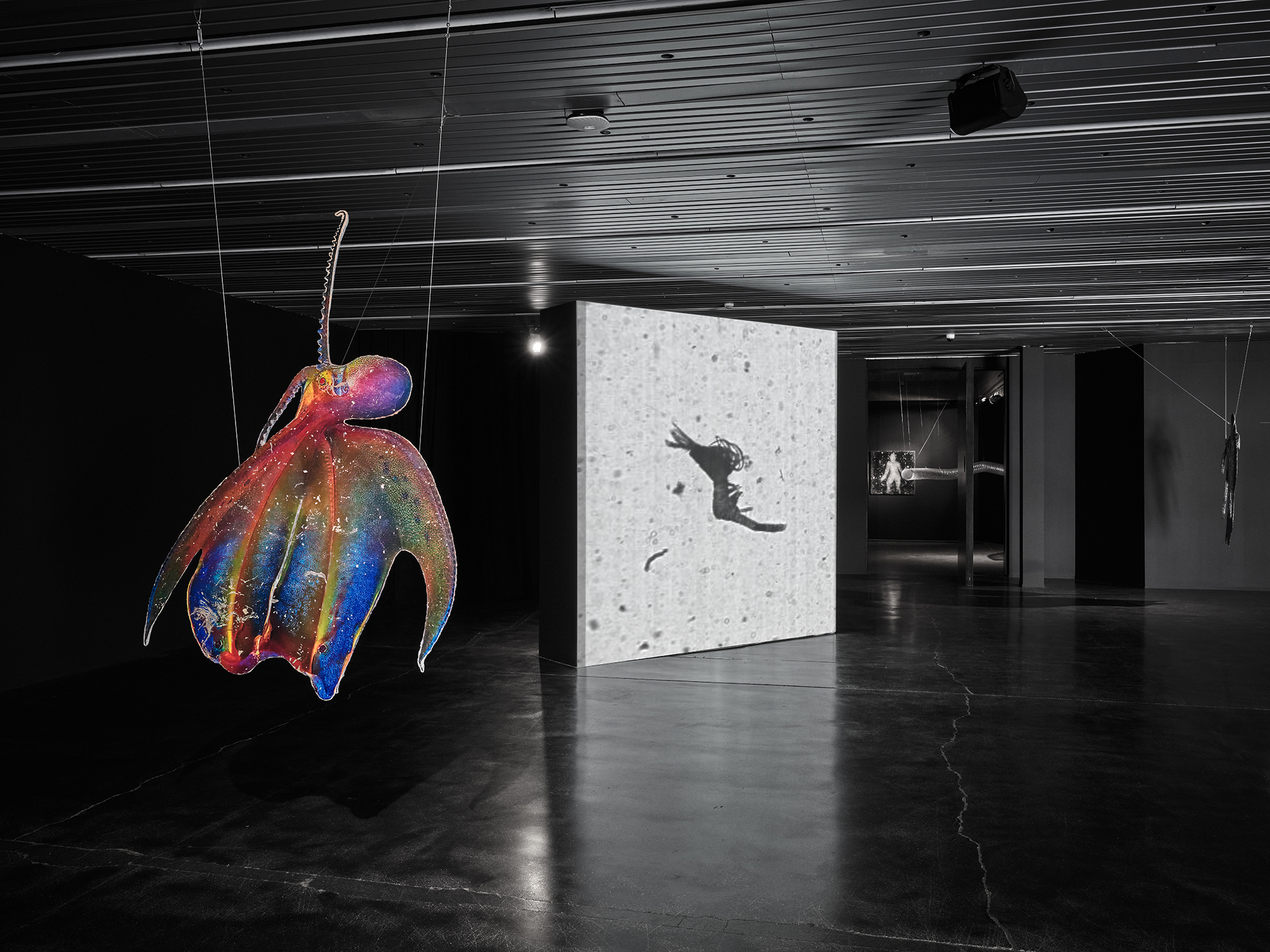
A new video work will depict a rapid succession of greyscale images of plankton that were taken by an automated deepsea camera. These photographs formed a large open dataset that has been part of a long-term scientific research project that analyzes plankton ecosystems. The ultimate goal of the open dataset project was training an algorithm, or an AI model, to process thousands of similar images for scientific purposes. Processing an image by a machine sometimes requires an initial training done with data indexed by human beings. These plankton photographs are specifically this type of data, and the green target marks on the images are a human’s attempt (in this case, mine) to identify and index species of plankton present in the photographs.
What is left unidentifiable are myriads of tiny specs that flicker like the specs on a damaged film roll. A combination of debris particles, micro-organisms and indeed microplastic remains, this video is a portrait gallery of the disturbed ecosystem. The rapid flicker of the video also alludes to the computational vision. It is an approximation of how, perhaps, this dataset is experienced from the perspective of the algorithm that eventually processes these images, at the speed beyond human capacity to process.
Pattern of Activation (plankton)
video loop in progress, 40 sec sound: Ghost Lemurs (Kareem Lotfy, Daniele Guerrini)

Plastivore Potential
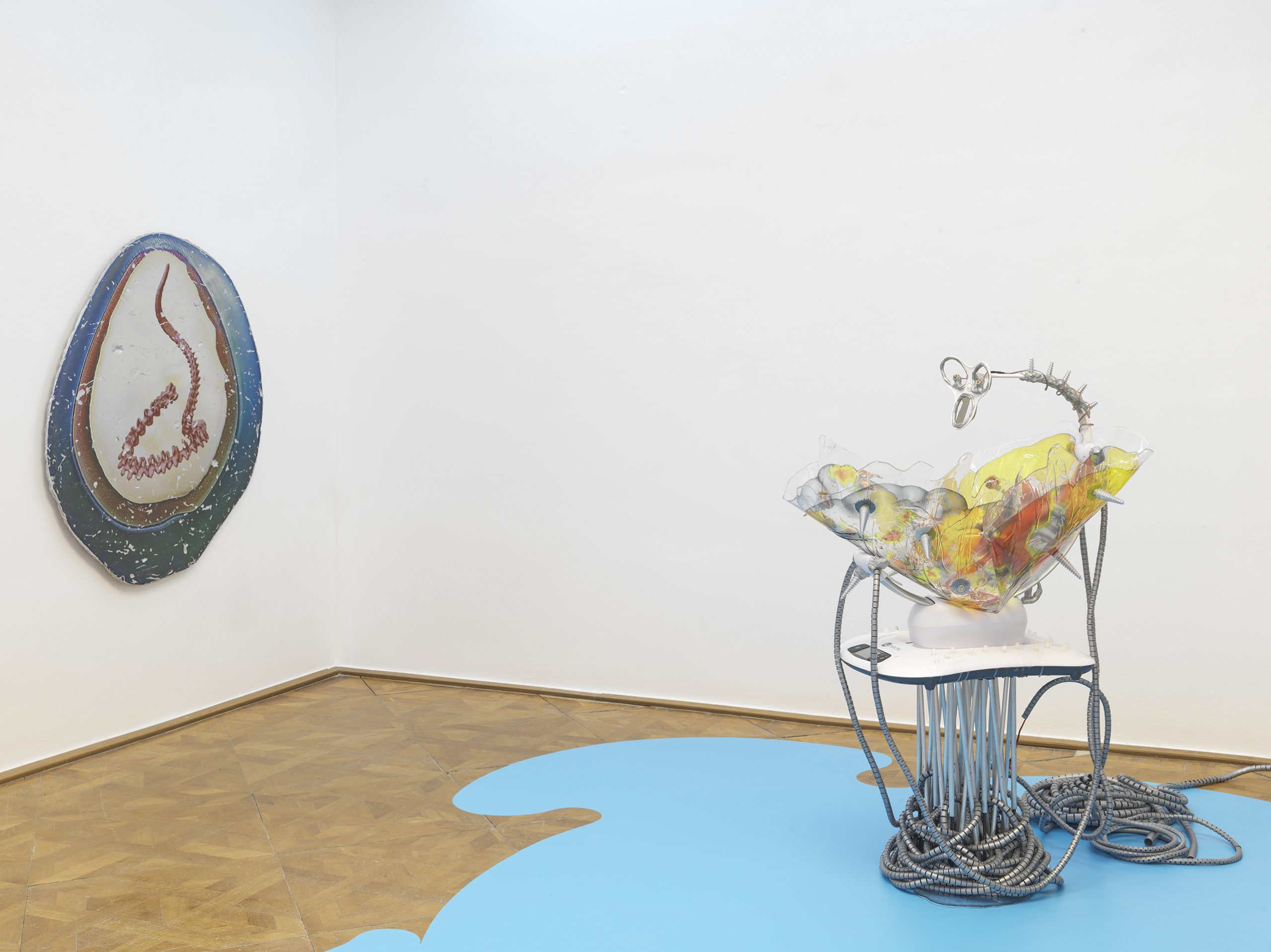
Plastivore Potential, 2026 In collaboration with Sissel Tolaas unique smell, ventilation tubing and pipes, fan, filters variable dimensions
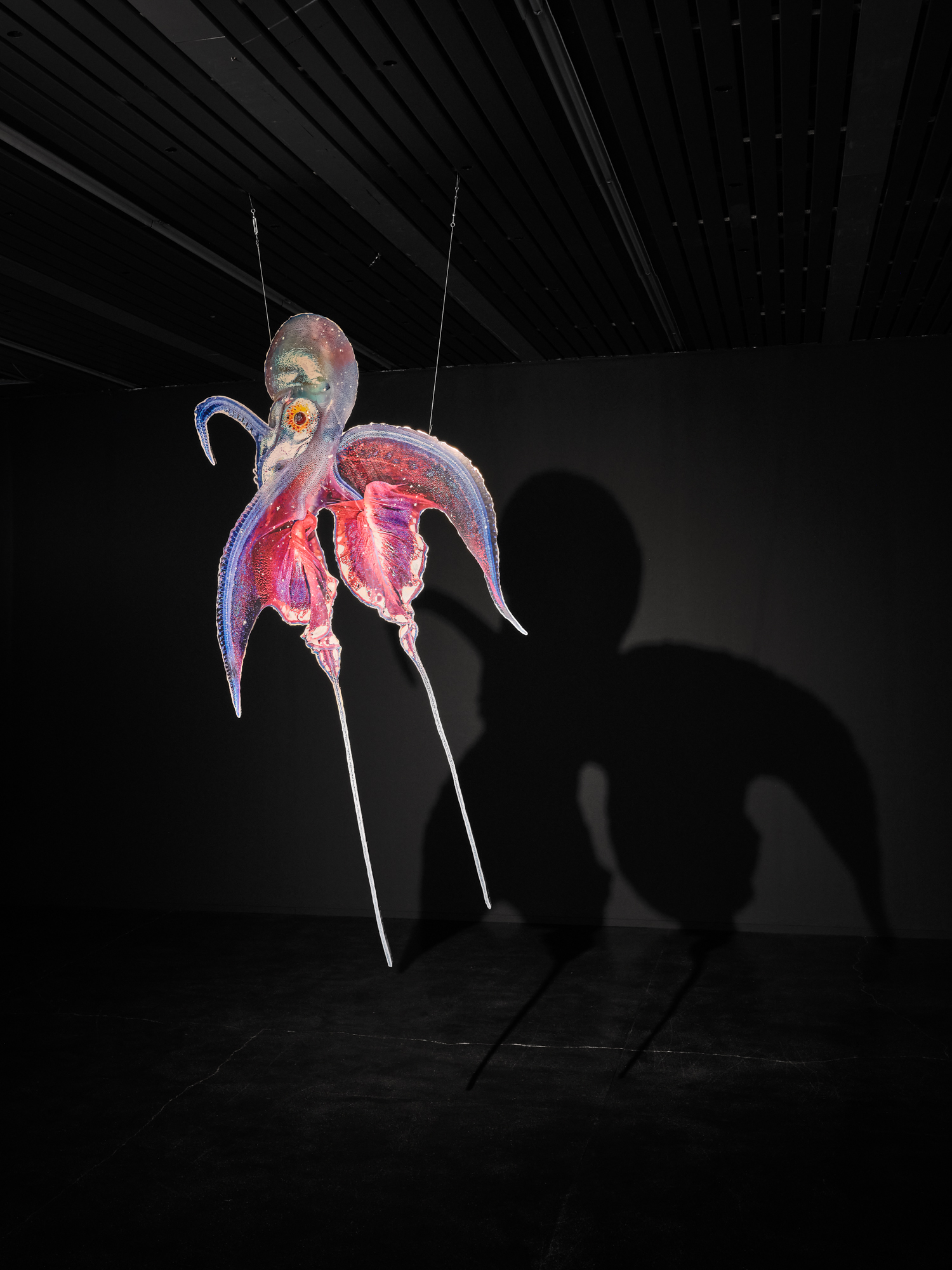
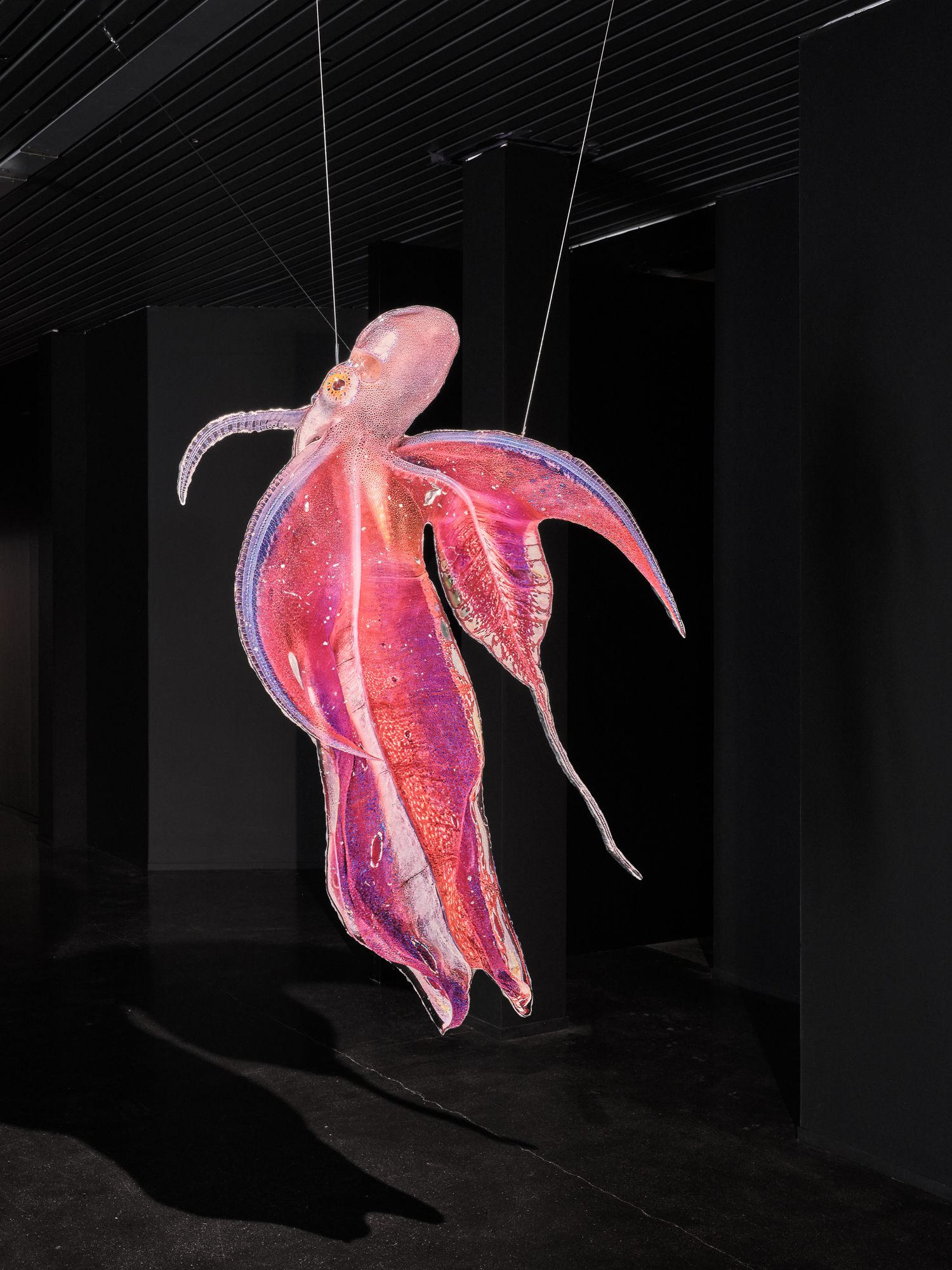
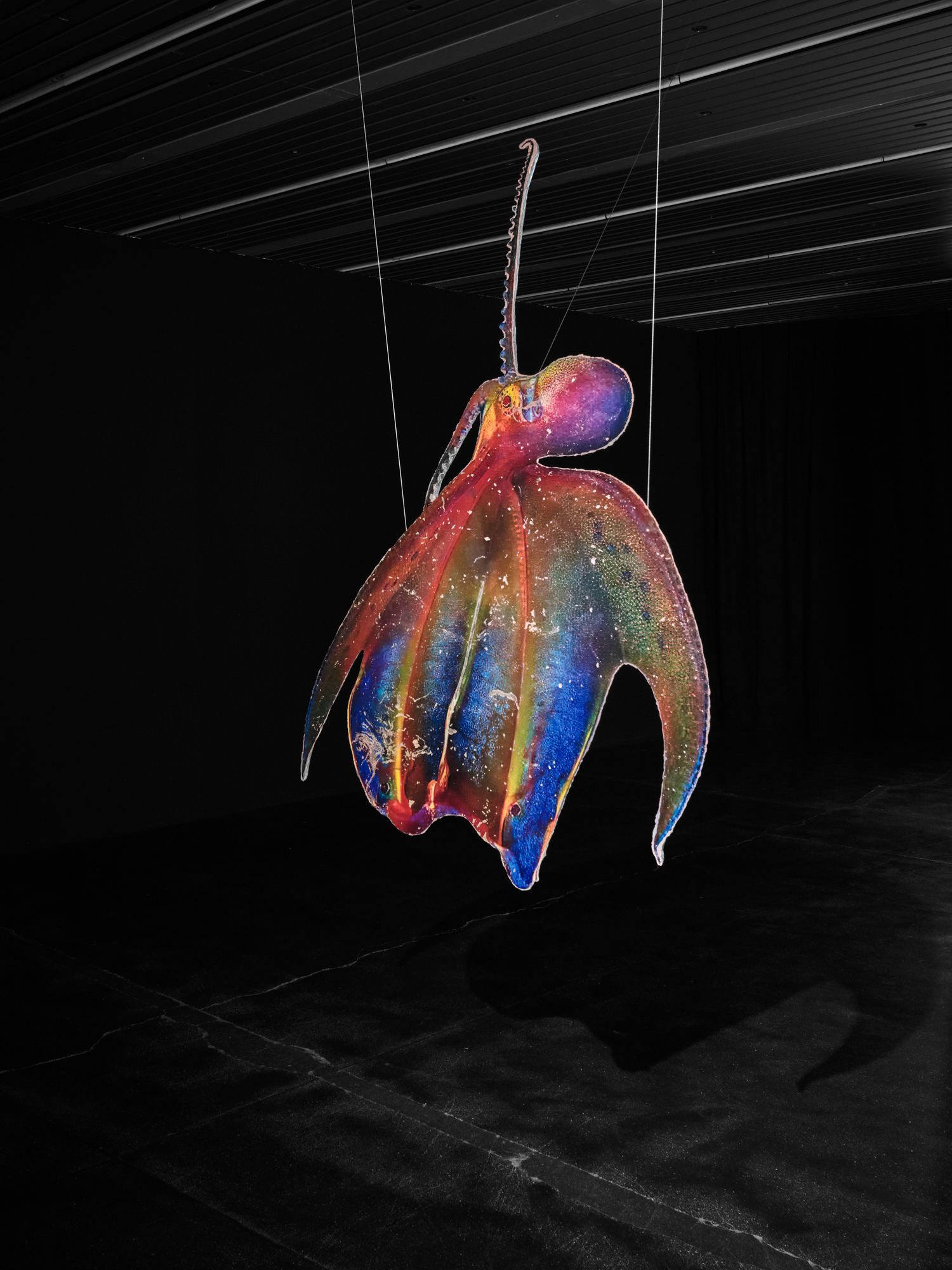
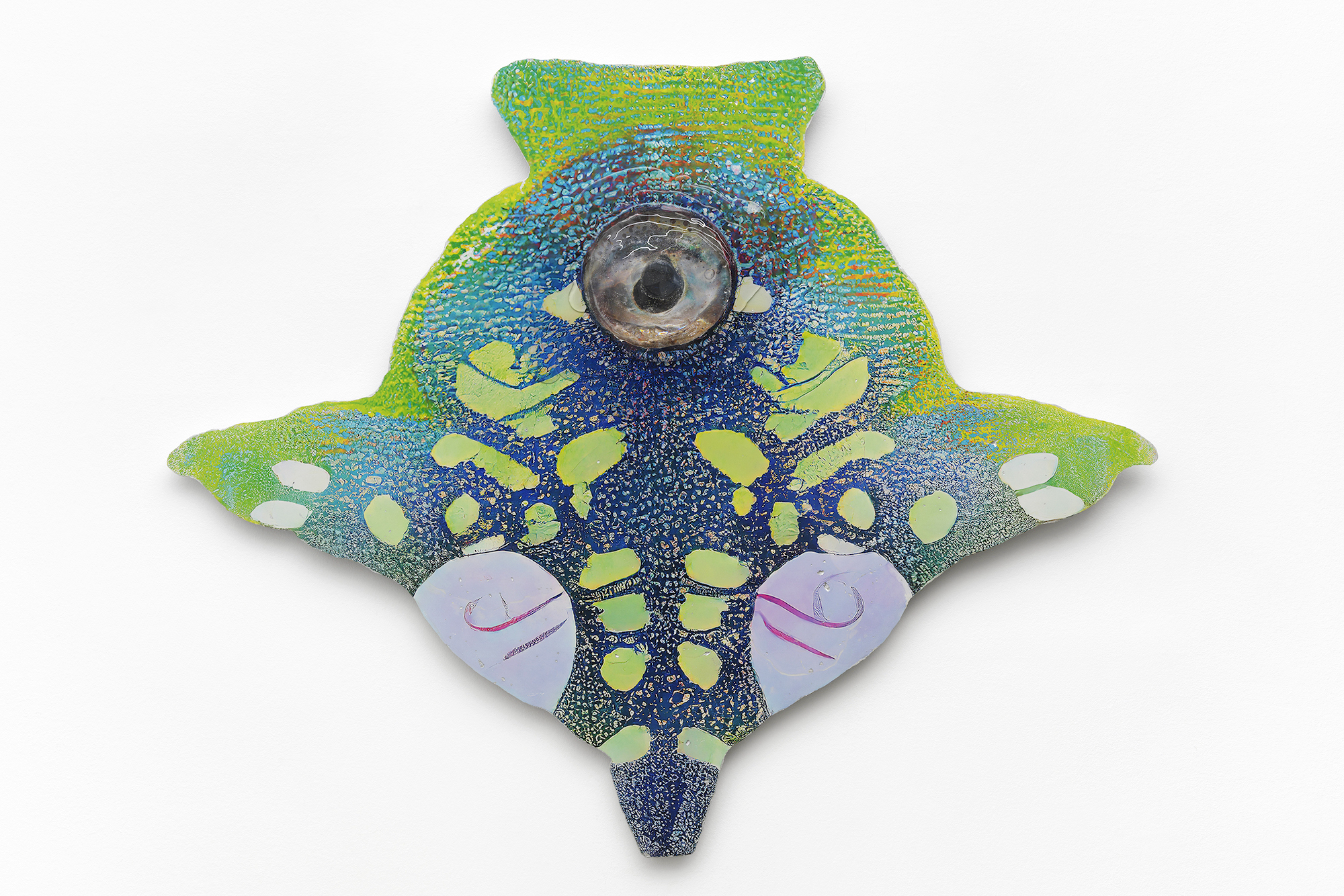
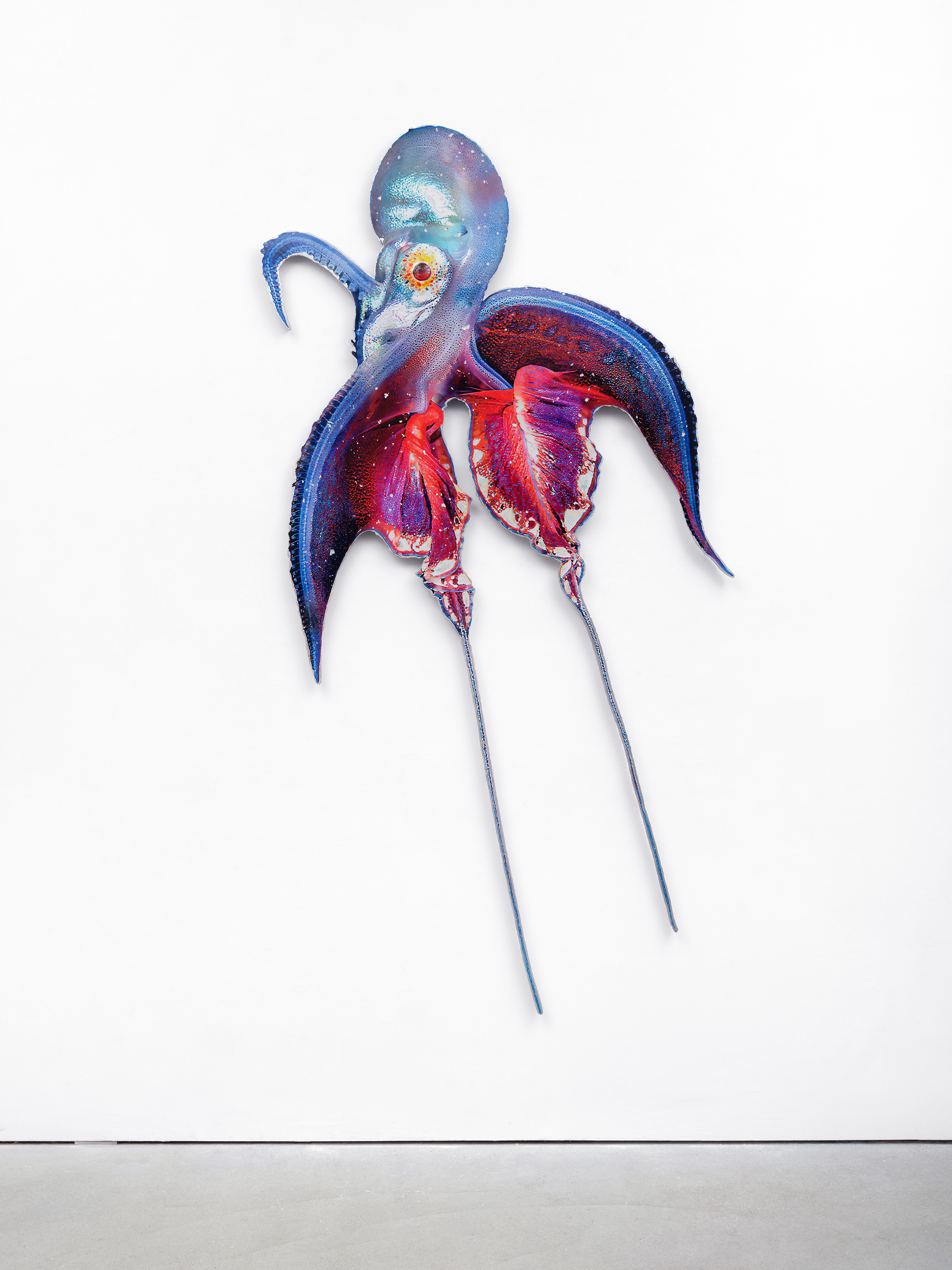
Earthware (mirror octopus 04)
UV-resistant ink transfer onto epoxy clay, nail polish. aluminium frame, PU resin, lenticular print 178 x 123 x 3 cm unique

Earthware (mirror octopus 02)
UV-resistant ink transfer onto epoxy clay, nail polish. aluminium frame, PU resin, lenticular print 158 x 118 x 4 cm unique

Earthware (mirror octopus 01)
UV-resistant ink transfer onto epoxy clay, nail polish. aluminium frame, PU resin, lenticular print 220 x 118 x 4 cm unique
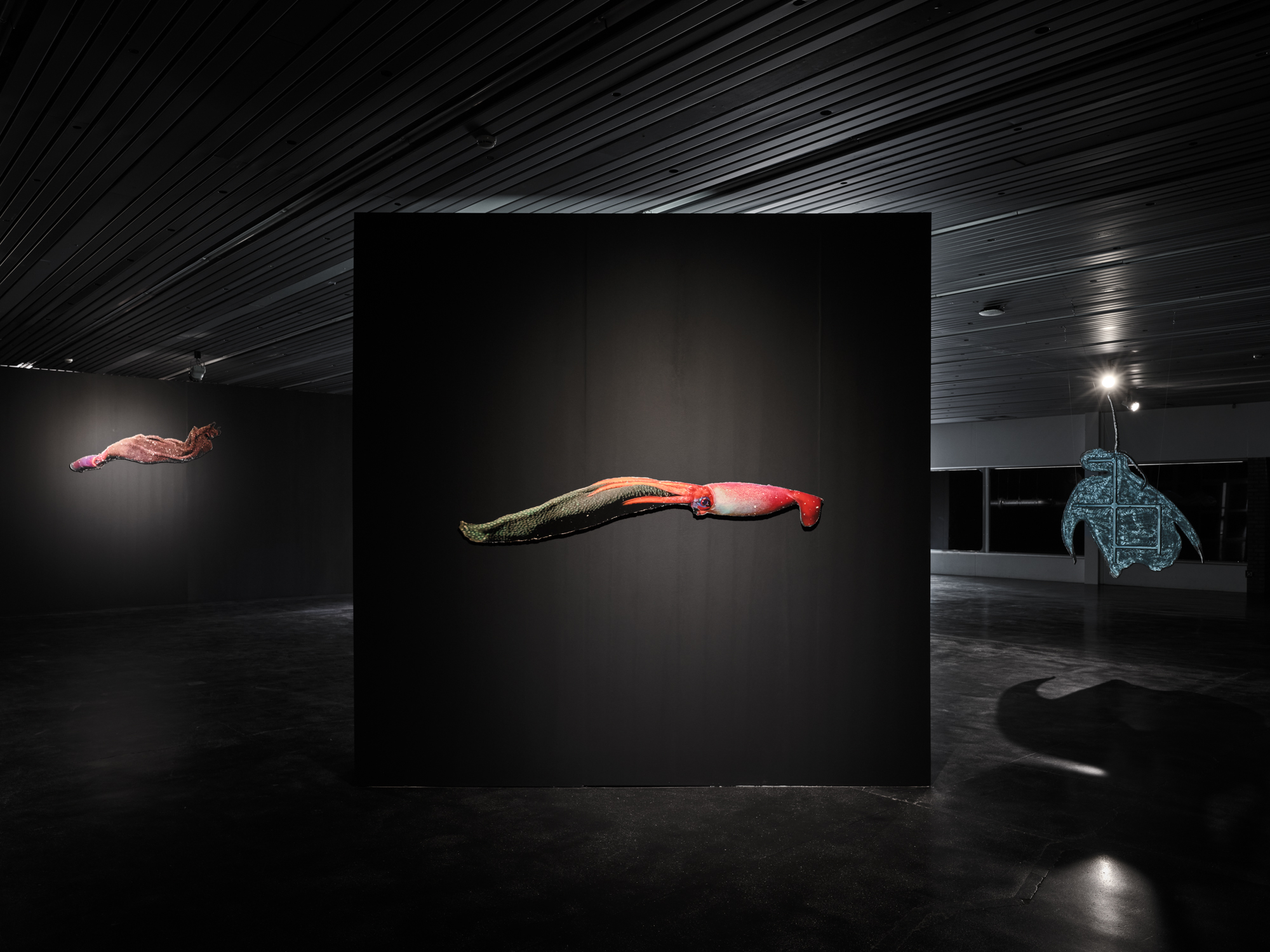
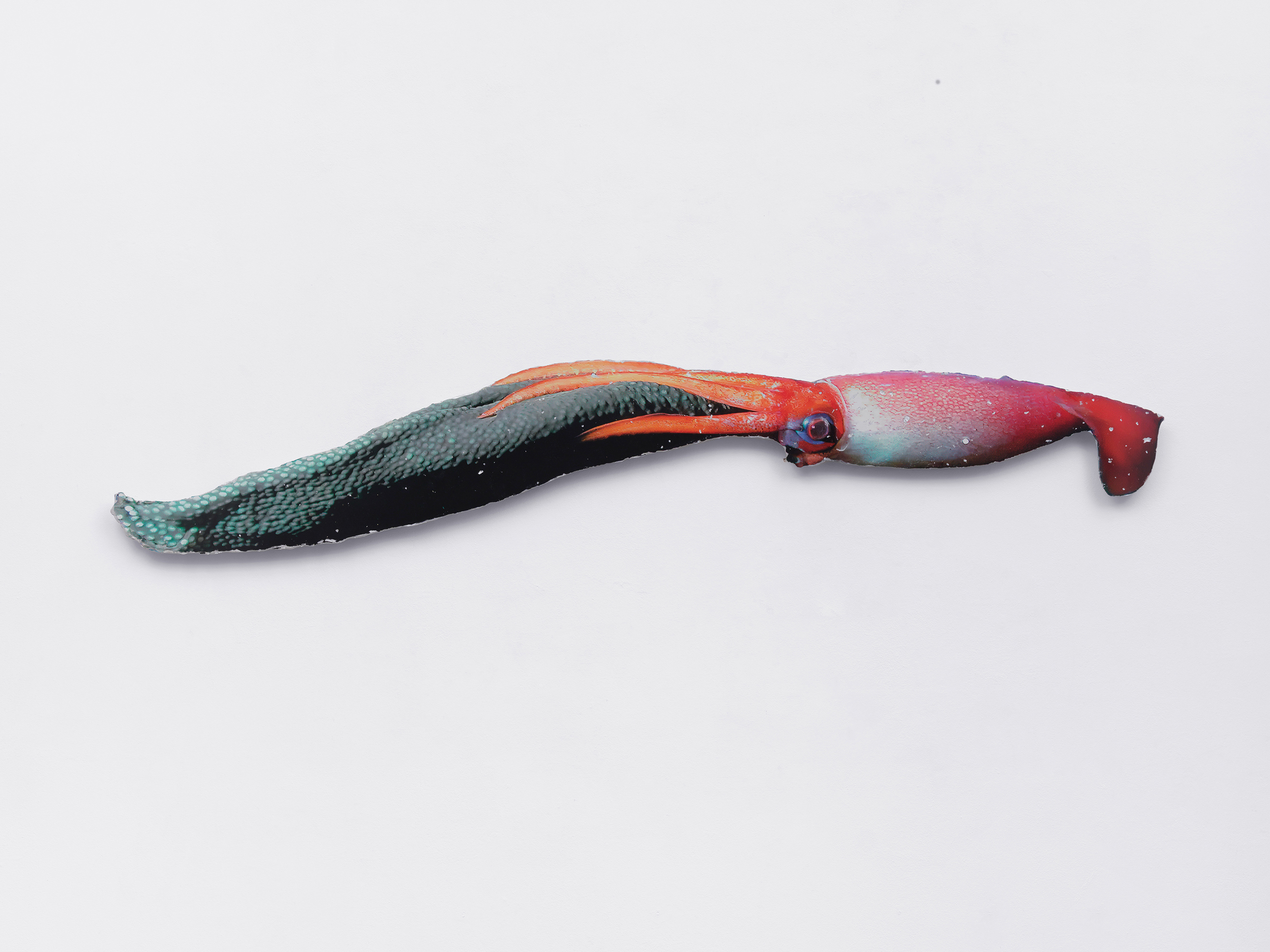
Earthware (brooding squid 02)
UV-resistant ink transfer onto epoxy clay, nail polish. aluminium frame, PU resin, lenticular print 37cm x 177.5cm x 3 cm unique
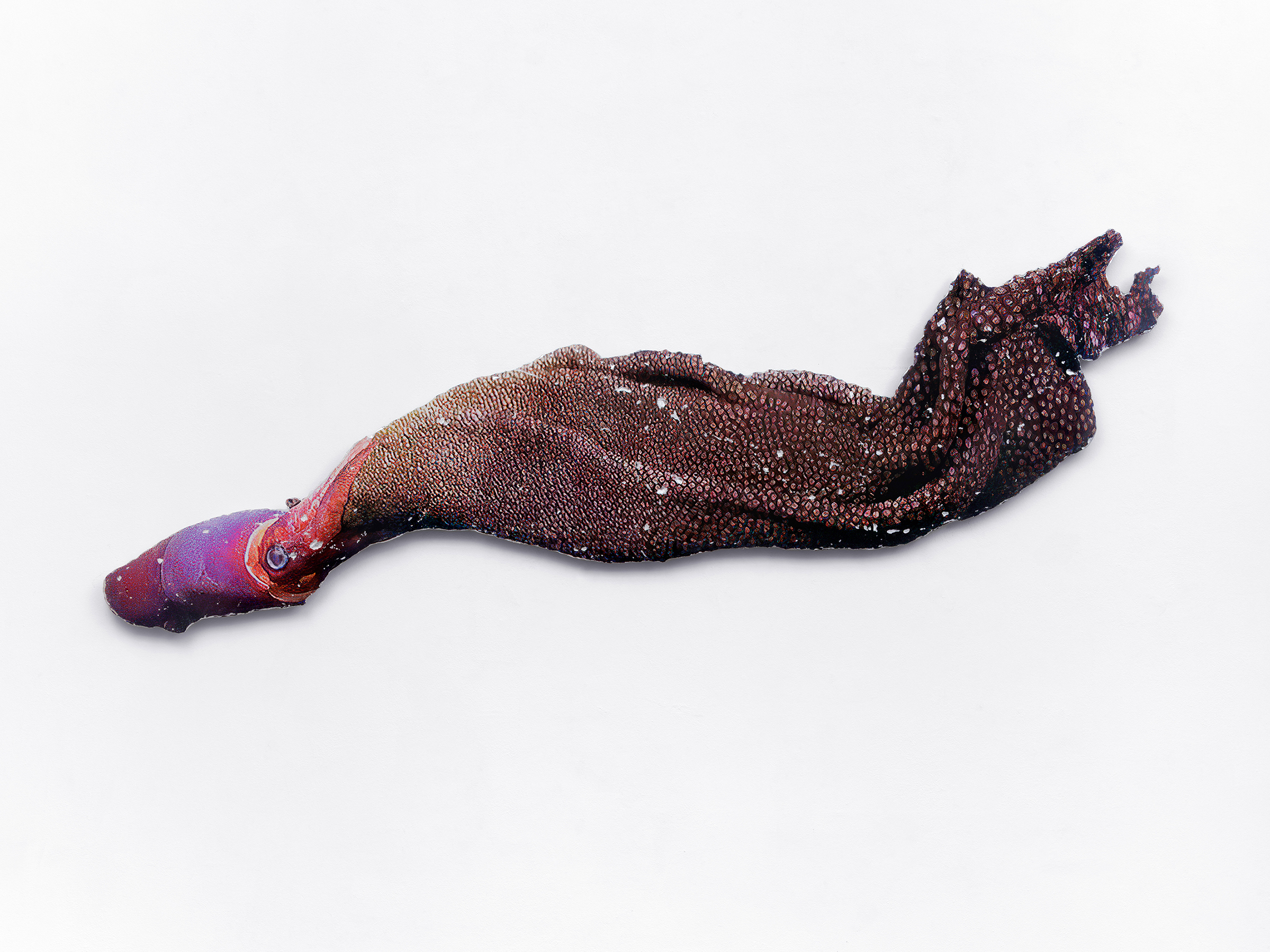
Earthware (brooding squid 01)
Epoxy clay, UV-resistant ink transfer, aluminium frame, nail polish, PU resin, lenticular print 73 x 203 x 3 cm unique
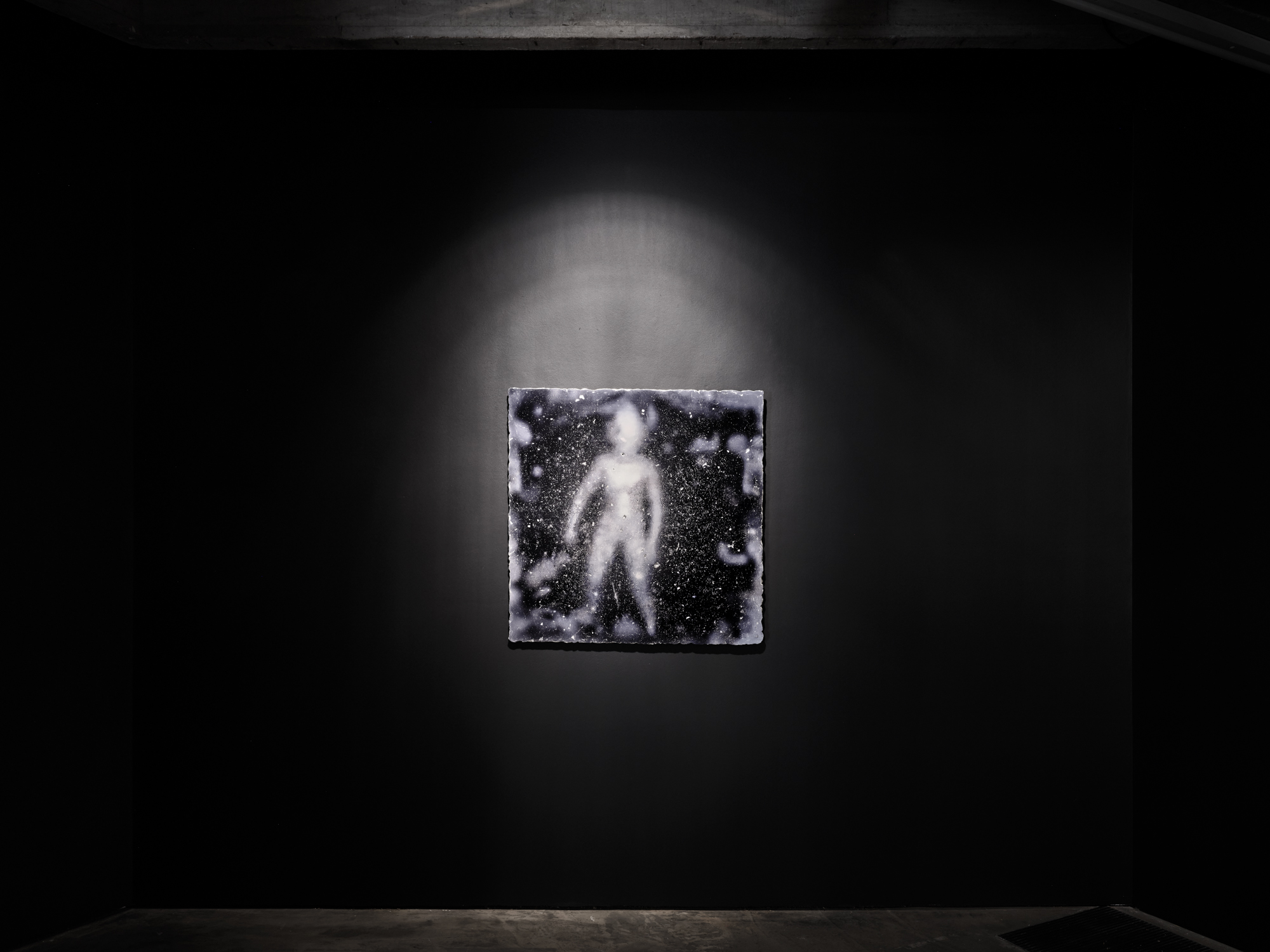
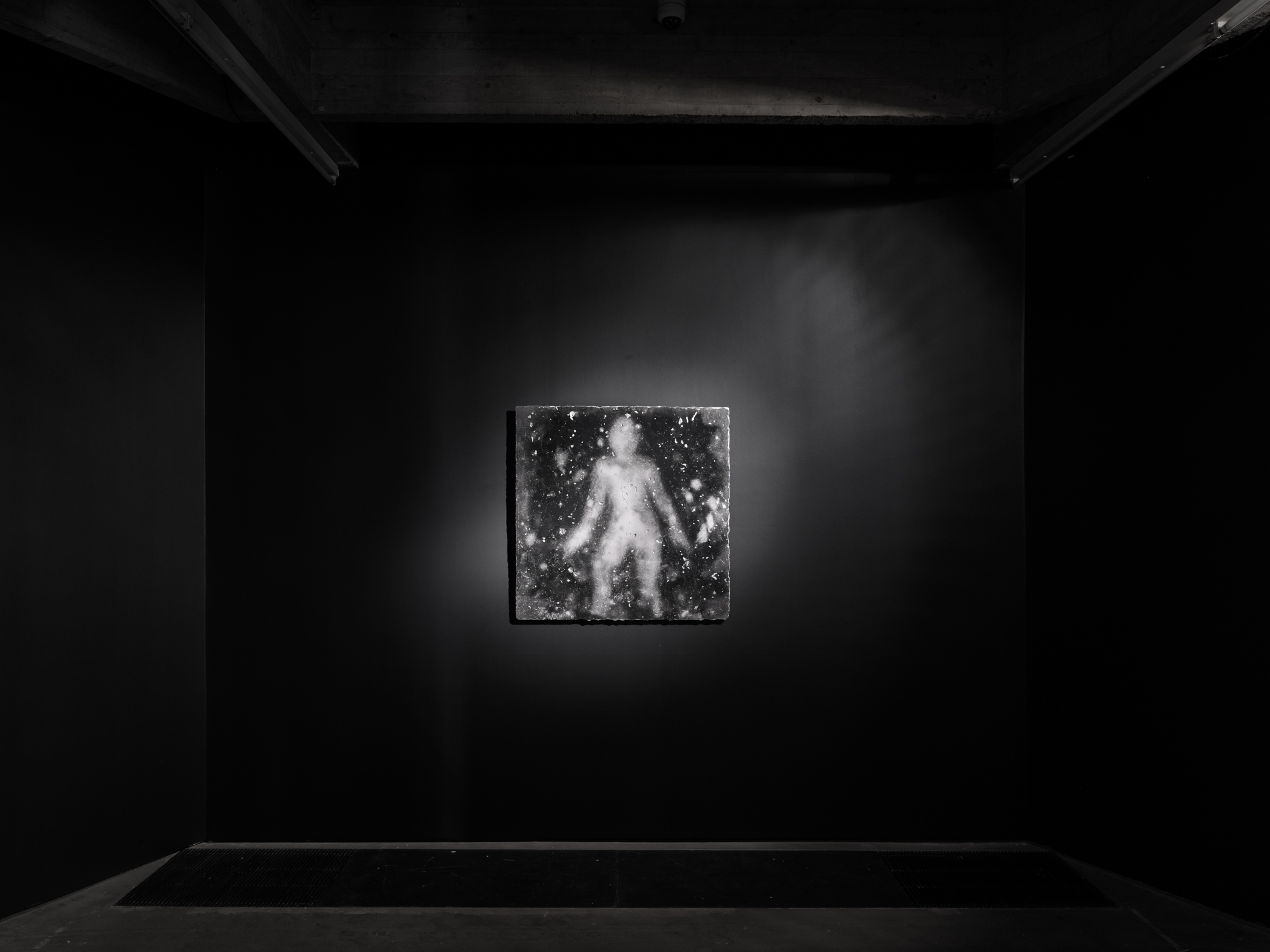
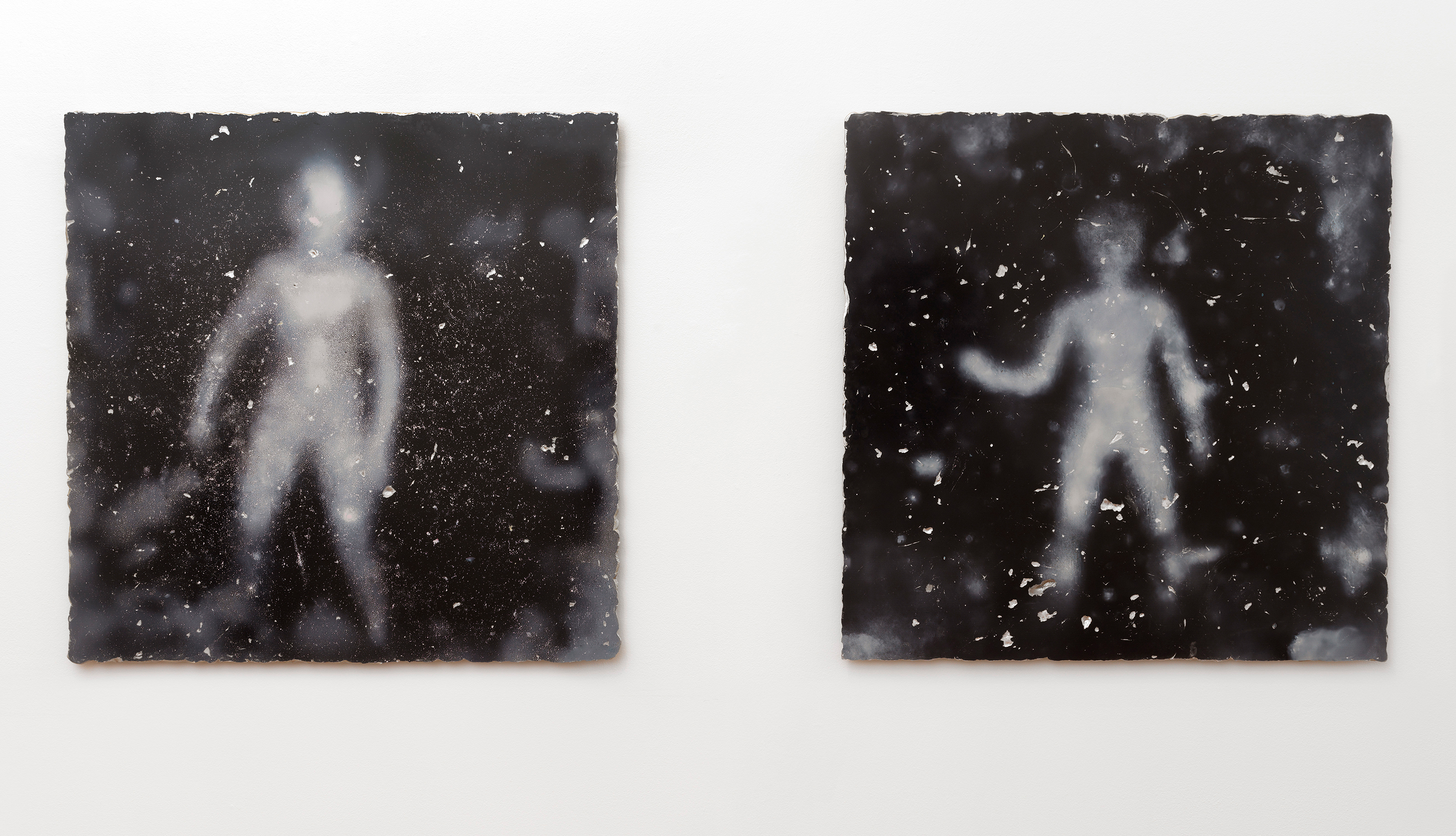
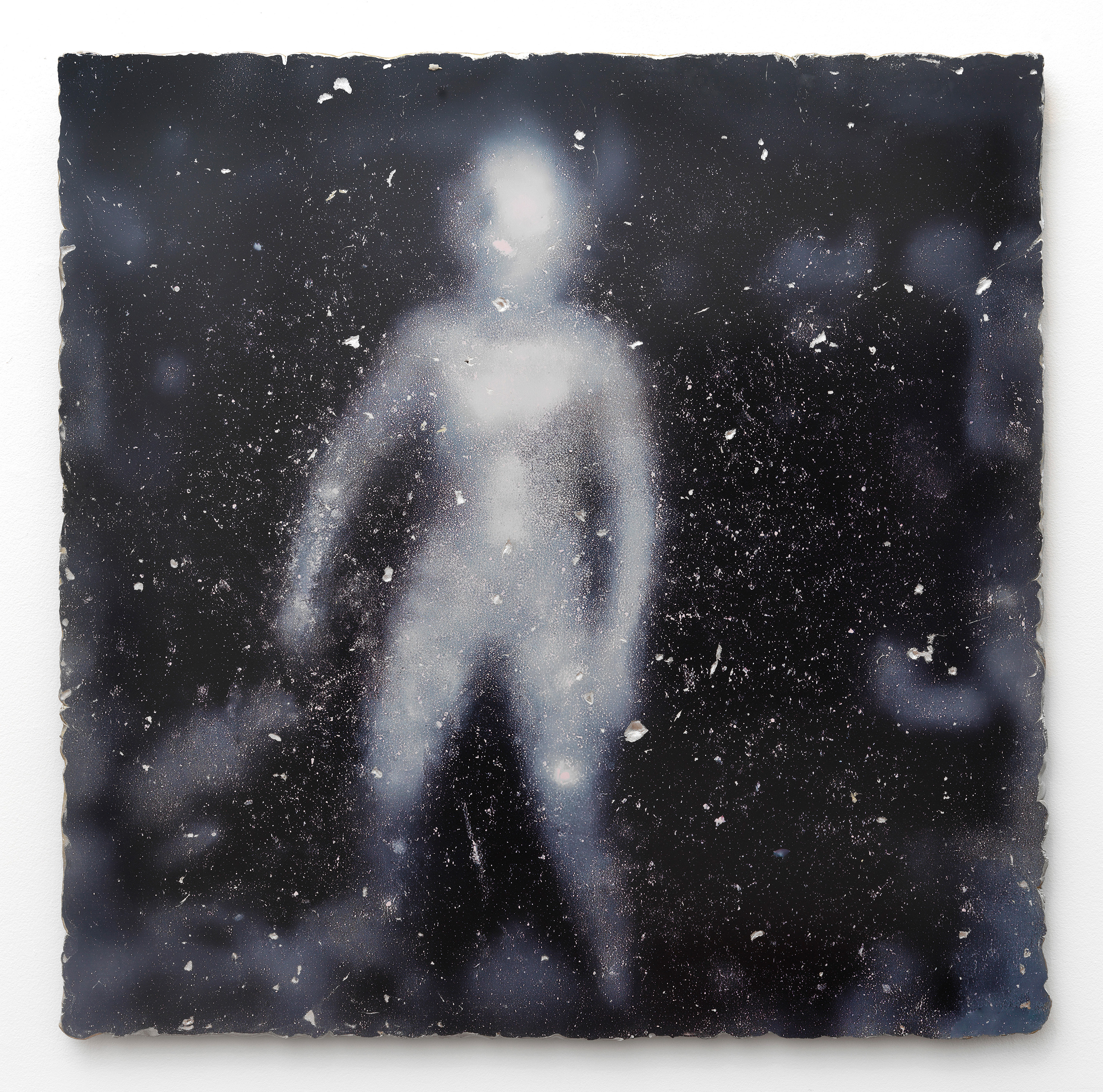
Earthware (dolphin vision as imagined by a human and an algorithm 03)
UV-resistant ink transfer onto epoxy clay, nail polish, aluminium frame 100 x 100 x 3 cm unique
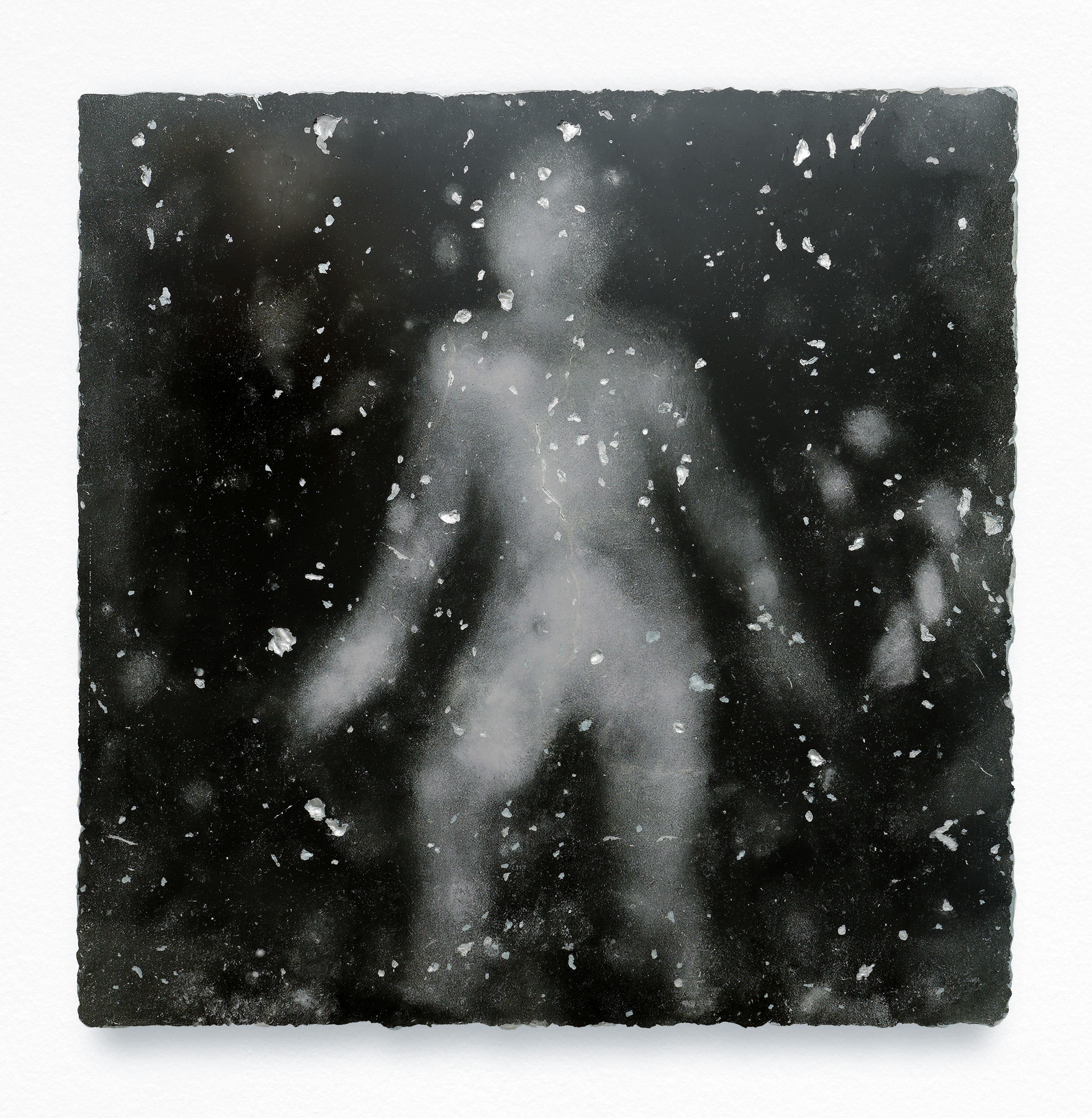
Earthware (dolphin vision as imagined by a human and an algorithm 02)
UV-resistant ink transfer onto epoxy clay, nail polish, aluminium frame 100 x 100 x 3 cm unique
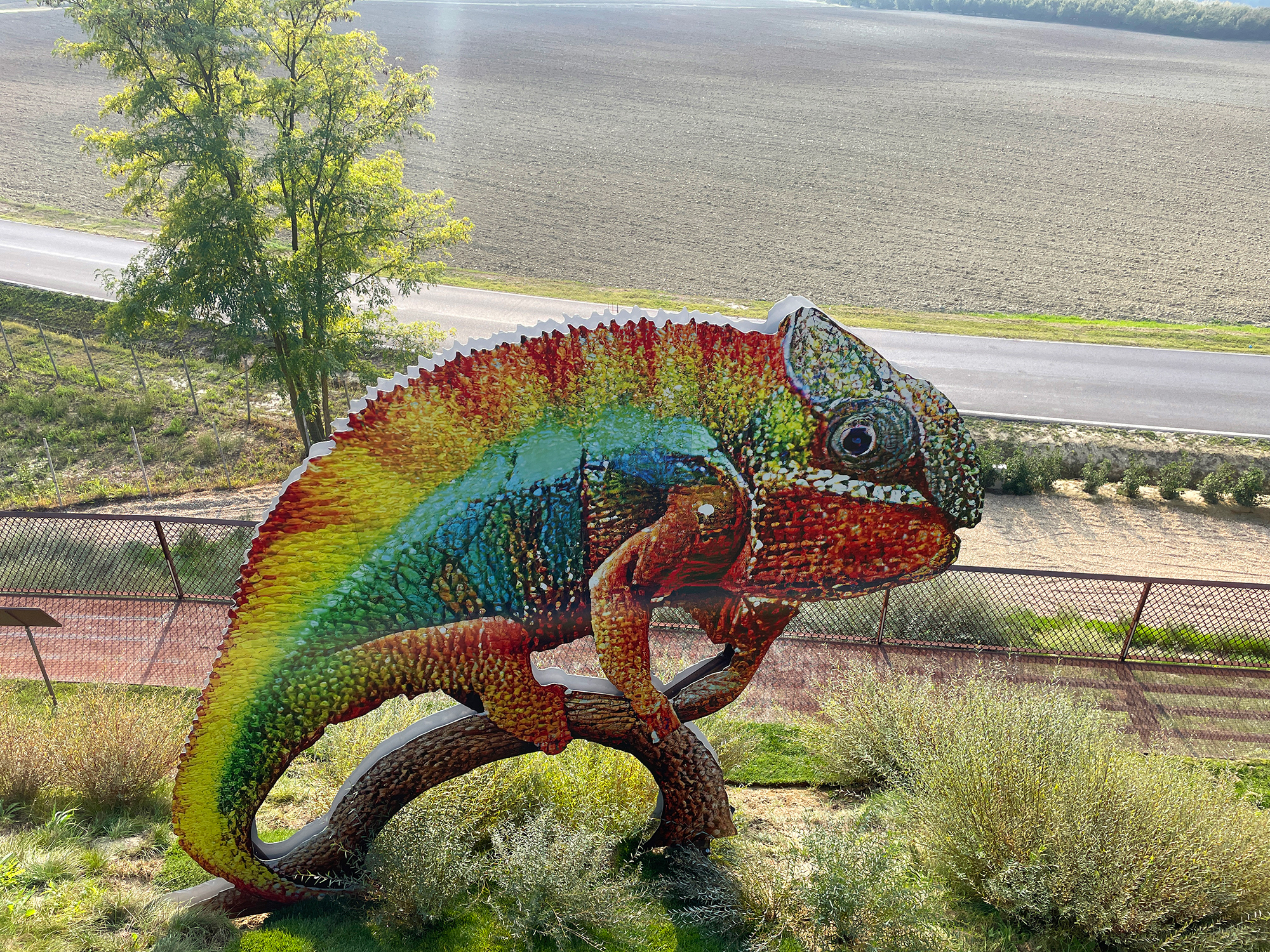
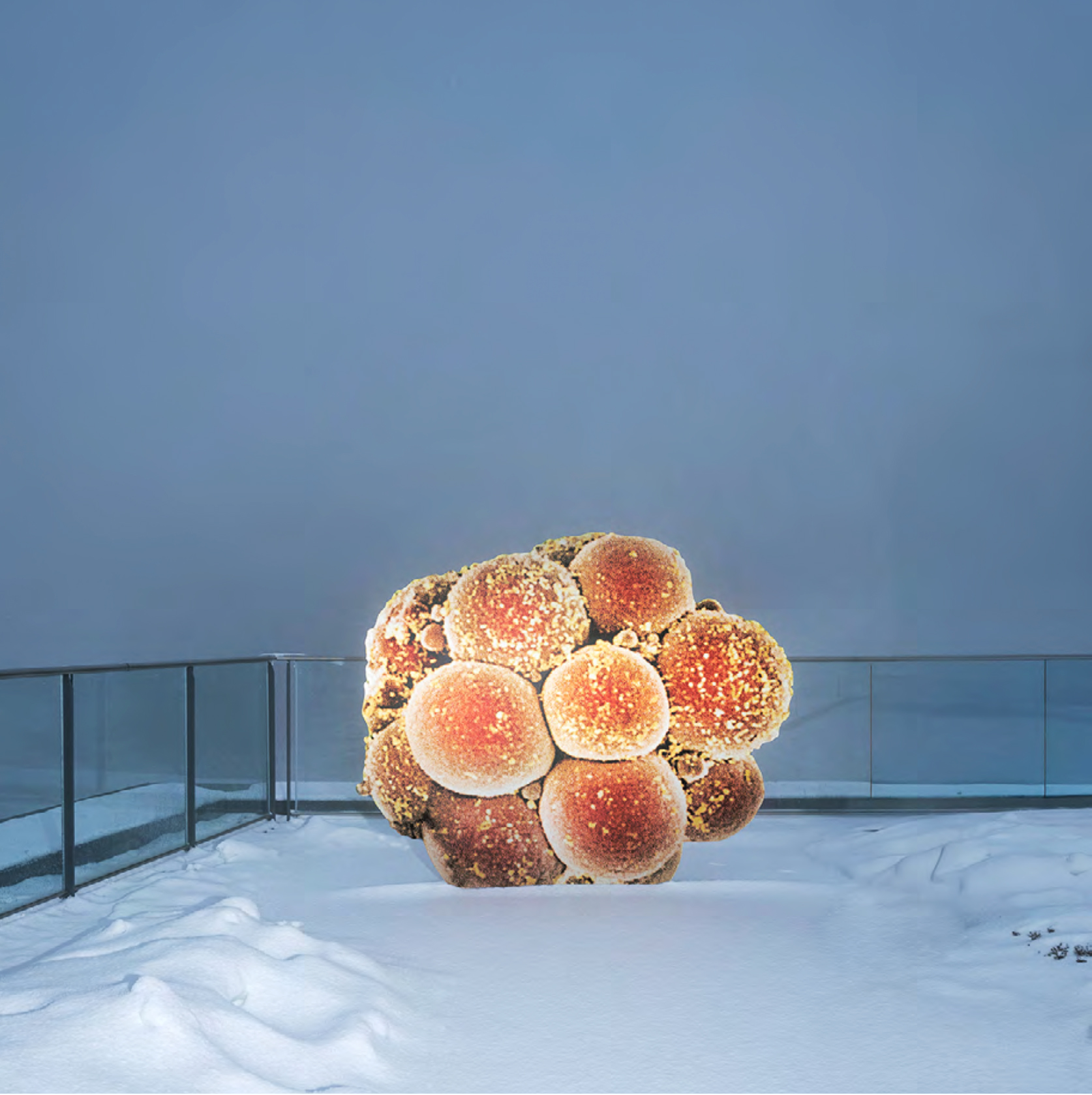
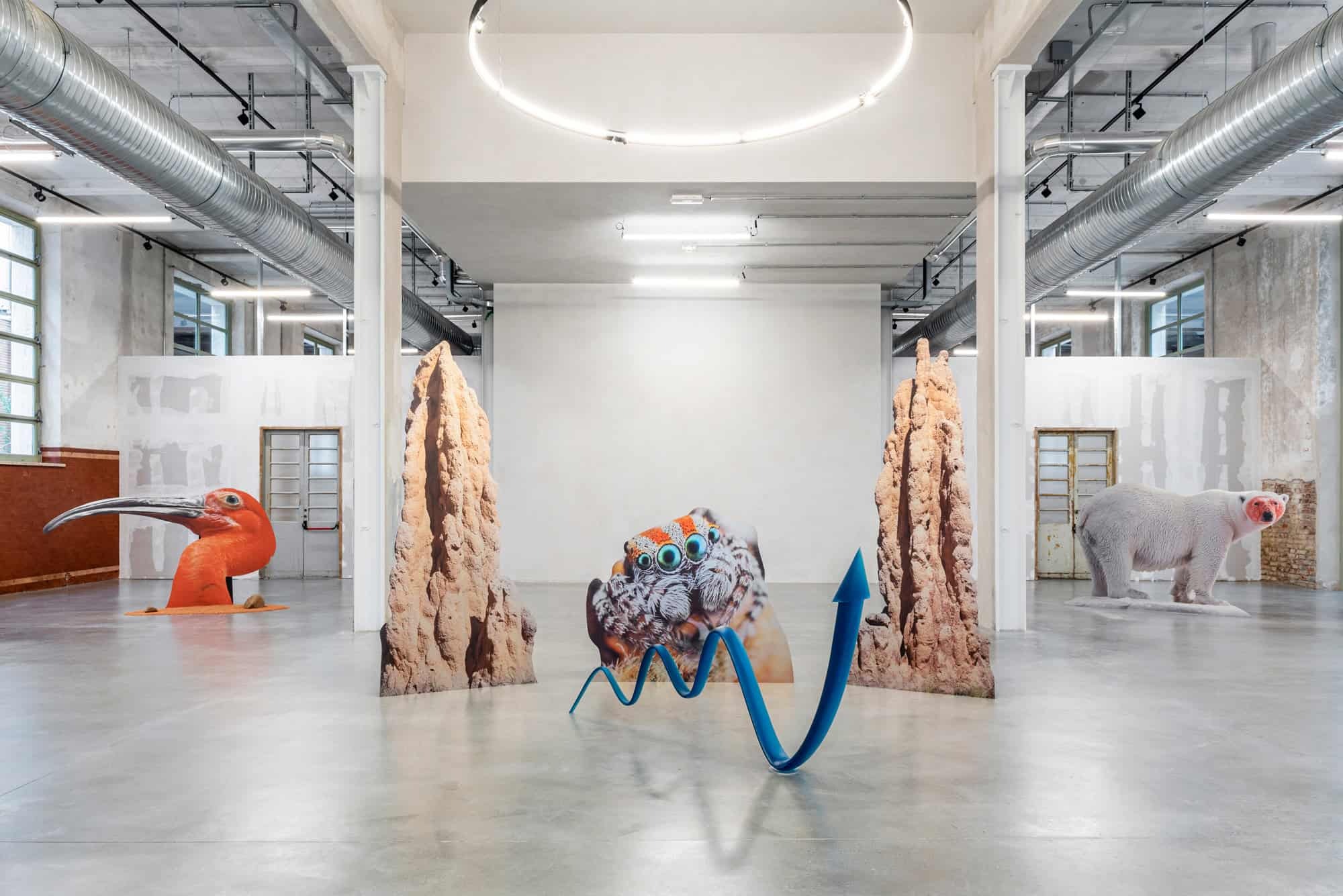
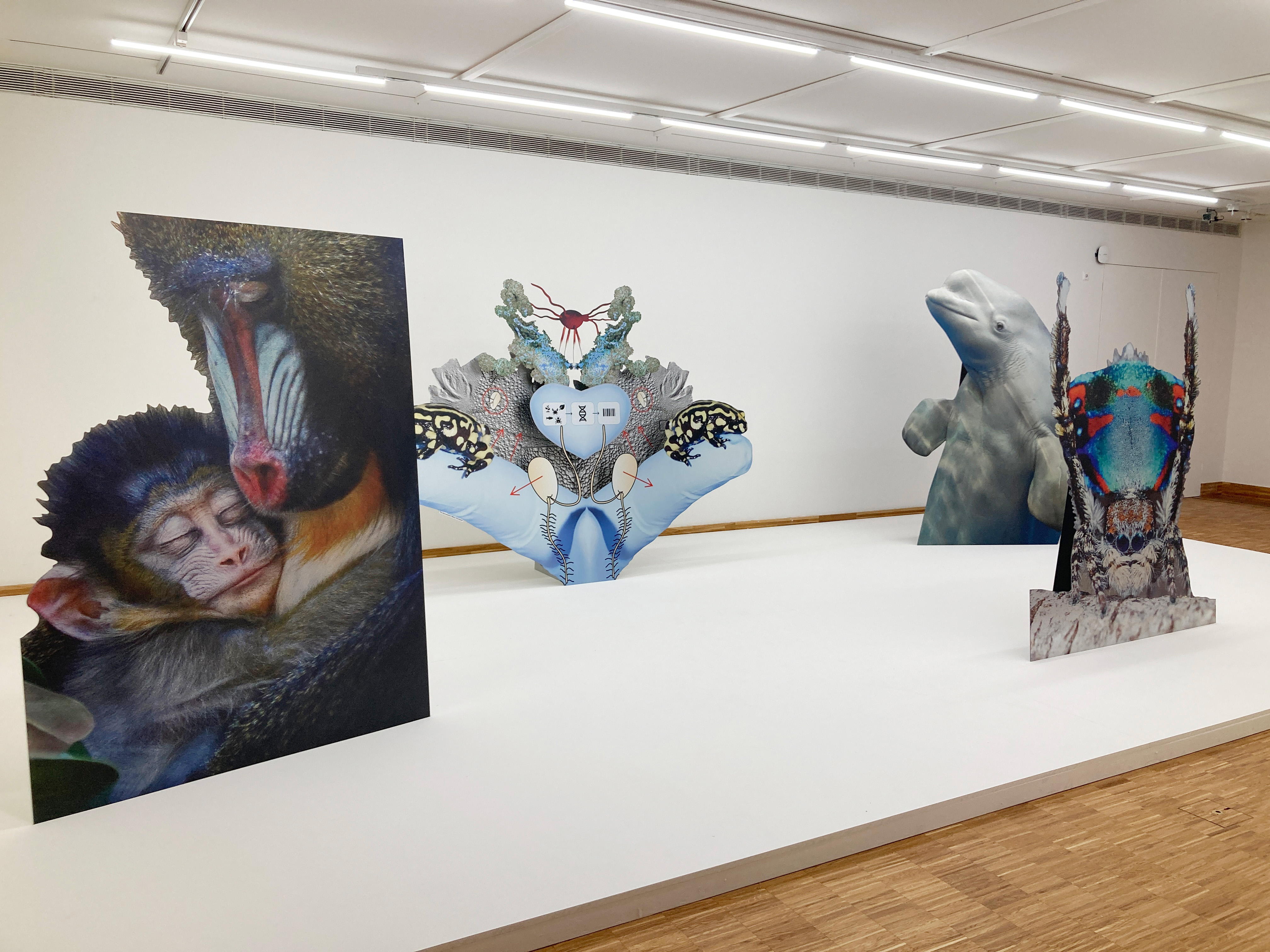
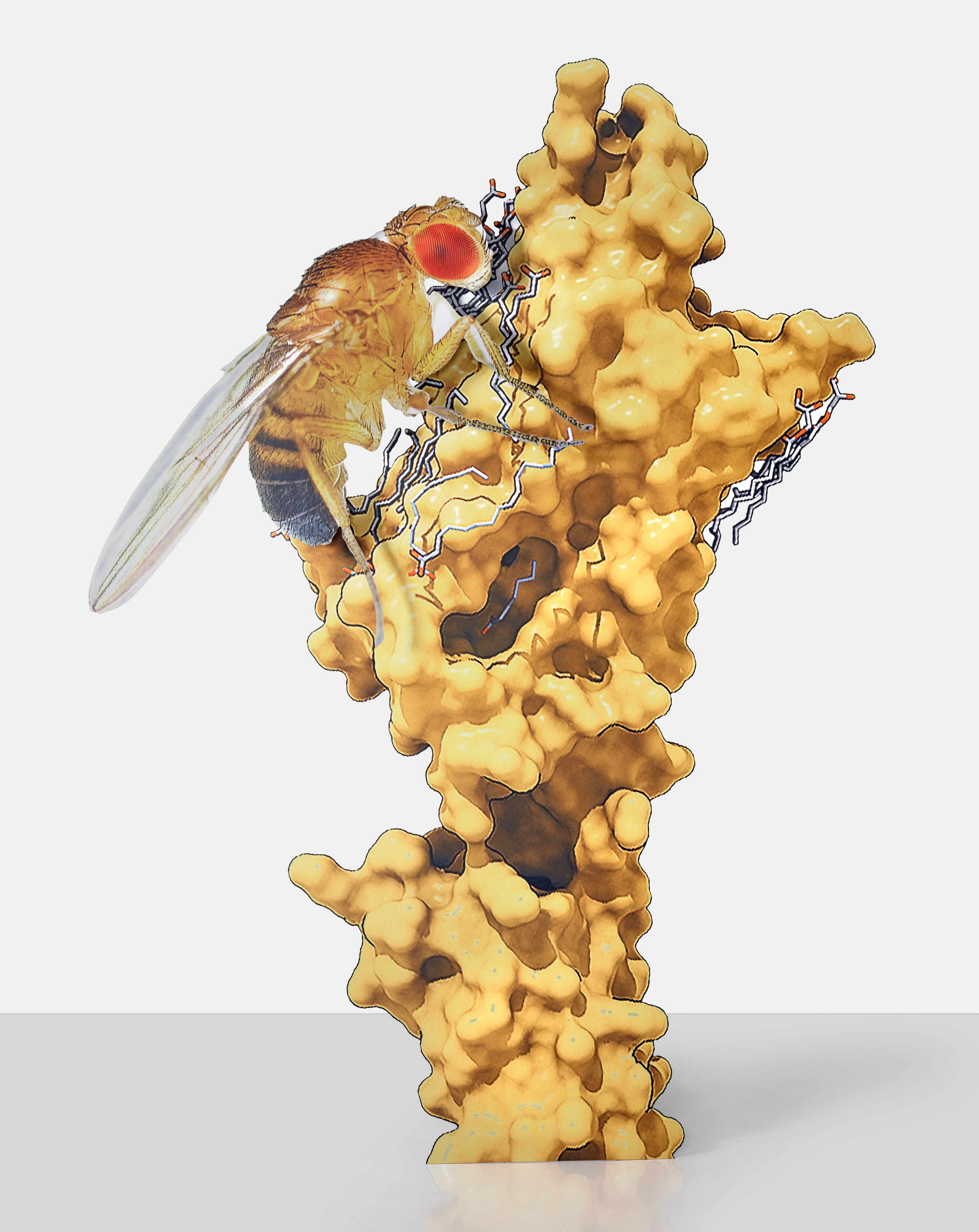
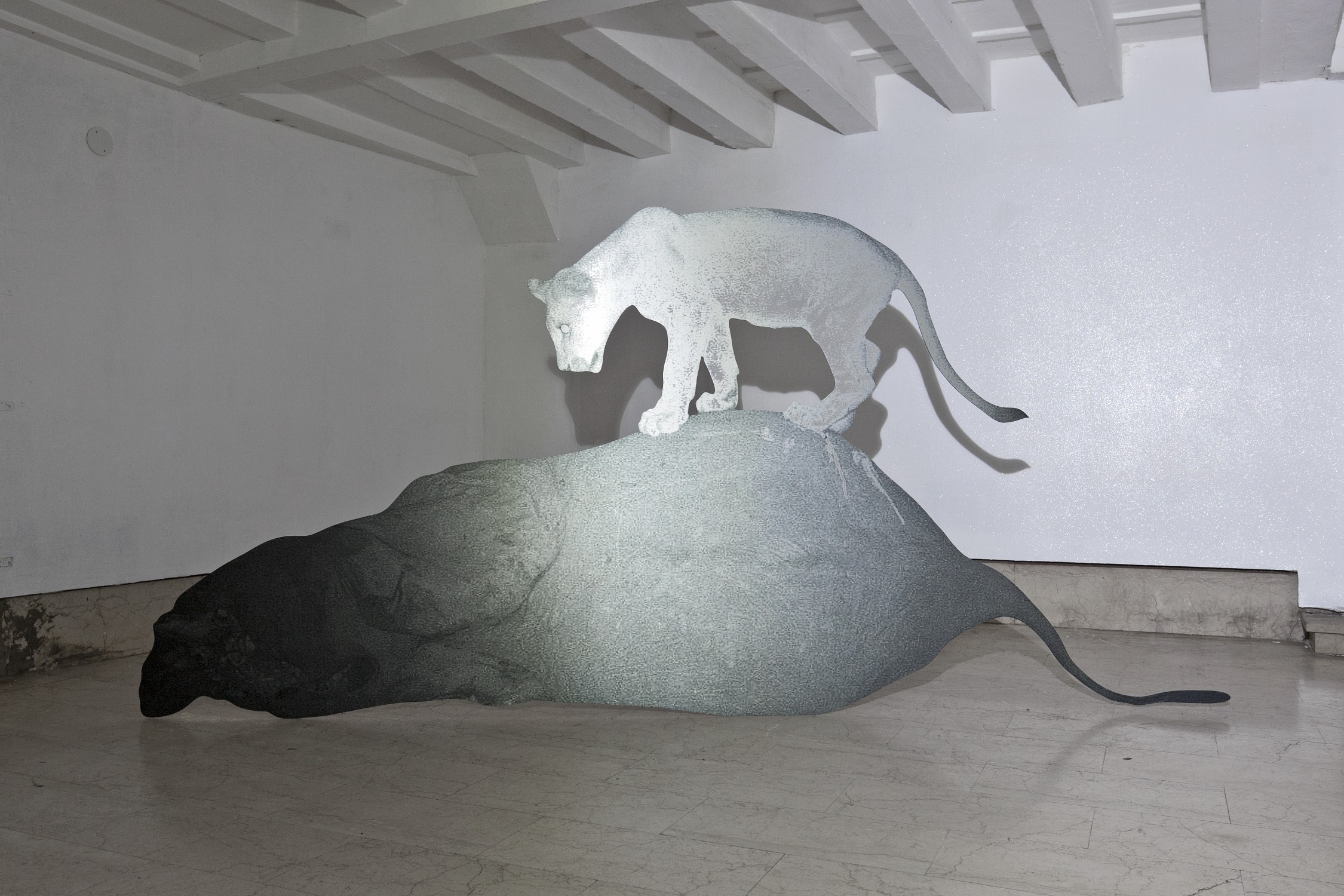
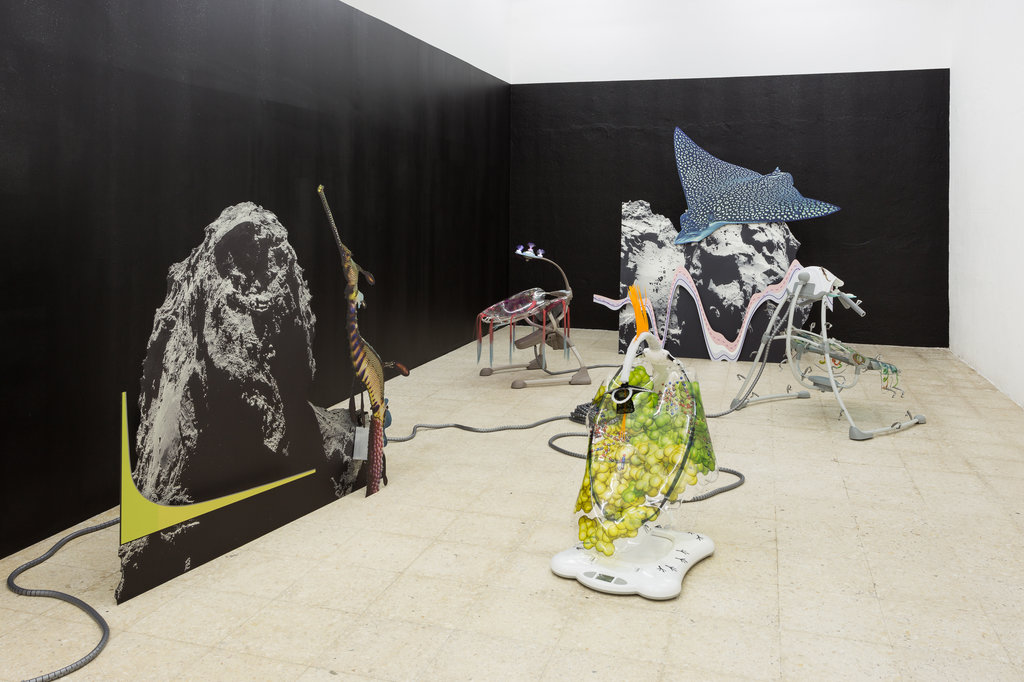
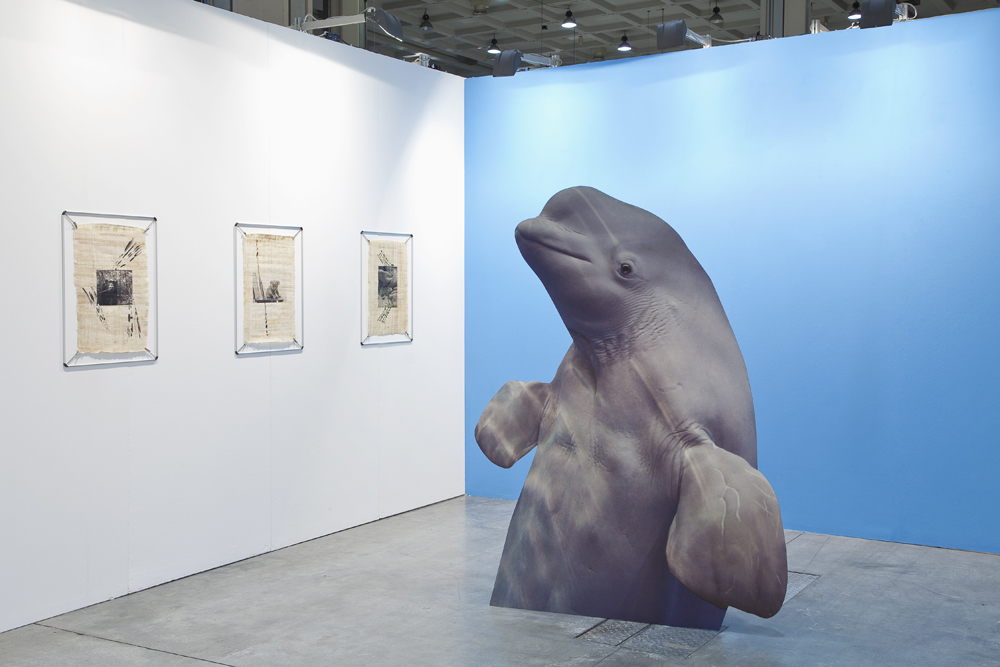
Approximation (manta ray)
digital print on aluminium, cutout display 150 x 157 x 35 cm Edition of 1 + AP
.jpg)